
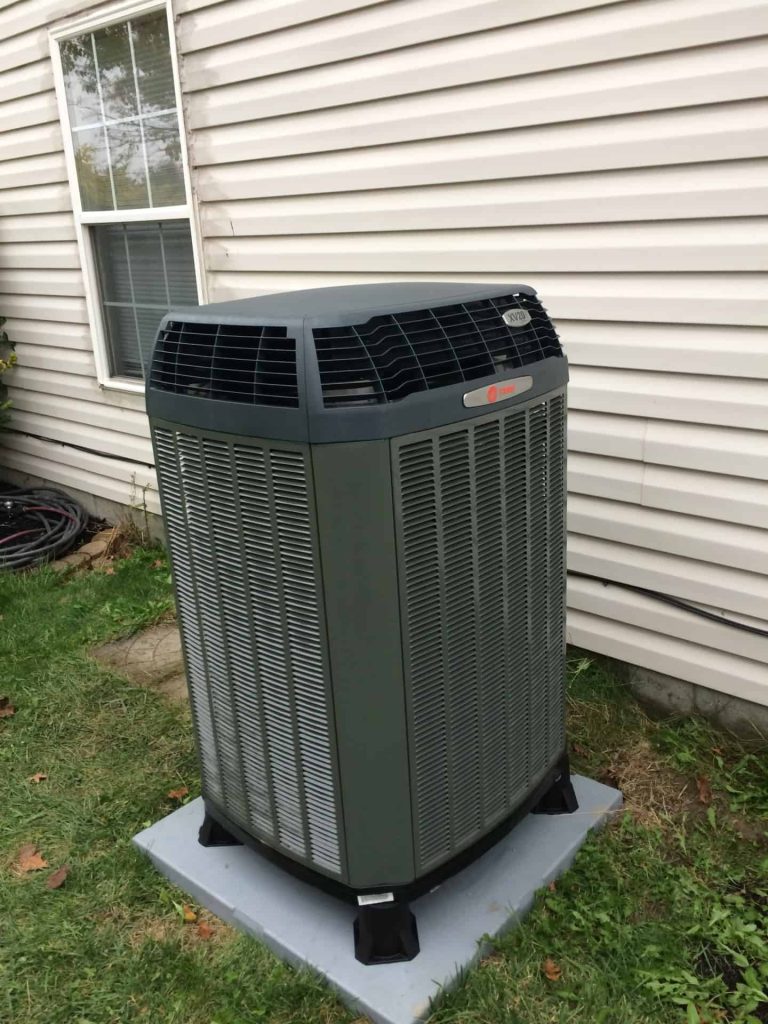
Yes. A heat pump moves existing heat rather than generating it, delivering roughly three units of heat for every unit of electricity consumed. Compared against electric resistance heating, that is a dramatic reduction. Compared against a natural gas furnace, the energy savings are real but the cost savings depend on local fuel prices.
That distinction matters more than most articles on this subject admit, and it is the difference between a heat pump that lowers your bills and one that does not. If rising heating and cooling costs prompted this question, the honest answer requires separating energy consumed from money spent.
Our team handles heat pump installation and service in Greenwood, IN, and we walk homeowners through this comparison regularly. Here is how the technology works and where the savings actually come from.
What Makes Heat Pumps Use Less Energy?
A heat pump is a scaled-up version of the technology inside your refrigerator. Rather than burning fuel to create warmth, it relocates heat that already exists.
The mechanism relies on a refrigeration cycle. Refrigerant circulating through the system absorbs heat from one location, gets compressed to raise its temperature, and releases that heat in another location before expanding and starting over. Because moving heat requires far less energy than creating it, the system delivers more thermal energy than the electricity it consumes.
The cycle reverses seasonally, which is why one piece of equipment handles both jobs. In summer, the system pulls heat from indoor air and rejects it outside. In winter, it extracts heat from outdoor air, even air that feels cold to you, and concentrates it indoors. There is usable thermal energy in air well below freezing, and the compressor’s job is gathering and concentrating it.
Contrast that with combustion. A furnace or boiler burns fuel to produce heat directly, and no combustion appliance can deliver more energy than the fuel contains. That ceiling is the fundamental limit heat pumps sidestep entirely.
How Does Heat Pump Efficiency Compare to Other HVAC Systems?
Efficiency comparisons across fuel types trip people up because the industry uses different measurements that do not translate directly.
- COP, or coefficient of performance, measures heat delivered per unit of electricity consumed. A COP of 3 means the system produces three times the energy it uses, commonly described as 300 percent efficiency.
- HSPF2 rates seasonal heating performance for air source heat pumps across a full heating season.
- SEER2 rates seasonal cooling performance and applies to heat pumps and air conditioners alike.
- AFUE rates combustion heating, expressing what percentage of fuel energy becomes usable heat. High-efficiency furnaces reach the low to high nineties.
On cooling, a heat pump and an air conditioner are effectively the same machine. An air conditioner is a one-way heat pump, so cooling efficiency comes down to SEER2 rating rather than system category. Replacing a fifteen year old air conditioner with a modern high-SEER2 heat pump produces real summer savings, while swapping a recent high-efficiency air conditioner for a comparably rated heat pump changes little on the cooling side. Either way, cooling services in Greenwood apply equally to both.
There is also a material efficiency argument worth noting. One piece of equipment handling heating and cooling means one outdoor unit to manufacture, install, and eventually dispose of, rather than a furnace and an air conditioner purchased separately.
Do Heat Pumps Use Less Energy Than a Gas Furnace in Indiana?
This is where the honest answer gets more nuanced than the marketing suggests.
In pure energy terms, yes, clearly. A heat pump operating at a COP of 3 consumes far less total energy than a gas furnace producing the same heat, because the furnace is limited to the energy contained in the fuel it burns while the heat pump multiplies its input.
In dollar terms, it depends on what you pay per unit of each fuel. Indiana has historically had access to relatively inexpensive natural gas, and electricity here carries a higher cost per equivalent unit of heat. When gas prices are low, a high-efficiency gas furnace can cost less to operate per season than an air source heat pump, even though it uses substantially more raw energy. When gas prices rise, that advantage narrows or reverses.
Against electric resistance heating, there is no contest. If your home currently uses an electric furnace or baseboard heat, a heat pump will cut heating consumption dramatically, typically by half or better depending on the model and how often backup heat engages. This is the single clearest case for switching, and it applies to a lot of homes in this area that were built without gas service.
The practical takeaway is that the right comparison is your current system and your current utility rates, not a national average. A technician can run those numbers against your actual bills.
How Do Geothermal Heat Pumps Compare?
Geothermal, also called ground source, applies the same refrigeration cycle to a more stable heat source. Instead of exchanging heat with outdoor air, a sealed loop of piping buried in the ground circulates fluid through soil that stays near fifty-five degrees year round in this region.
That stability is the entire advantage. Air source systems face their hardest work on the coldest day, precisely when demand peaks. A ground loop faces roughly the same conditions in January as in July, so performance stays consistent and supplemental electric heat is rarely needed.
Efficiency reflects that. Where air source heat pumps commonly operate around a COP of 3, geothermal systems typically land in the range of 3.5 to 5, meaning 350 to 500 percent efficiency depending on loop design, soil conditions, and equipment. The EPA has identified ground source heat pumps as among the most energy-efficient heating and cooling technologies available for residential use.
The tradeoff is installation. Ground loops require either horizontal trenching across available yard space or vertical boring, which drives upfront cost well above an air source system. Lot size, soil composition, and existing landscaping all factor in. Geothermal system installation in Greenwood begins with a site evaluation, since not every property can accommodate a loop field economically.
What Does a Heat Pump Cost to Install and Run?
Equipment pricing shifts with capacity, efficiency tier, and site conditions, so treat any published figure as a starting range rather than a quote.
Air source heat pump installations generally run several thousand dollars above a comparable air conditioner alone, reflecting the additional heating components and controls. Compared against installing a furnace and an air conditioner as a pair, the gap narrows considerably, since the heat pump replaces both. Geothermal sits meaningfully higher because of the loop field.
Three factors determine whether the premium pays back:
- What you are replacing. Coming off electric resistance heat produces fast payback. Coming off a functioning high-efficiency gas furnace produces slow payback or none, depending on fuel prices.
- Available incentives. Federal tax credits and utility rebates for qualifying high-efficiency heat pumps and geothermal systems can offset a substantial portion of installed cost. These programs change, so verify current terms at the time of purchase.
- Expected service life. Heat pumps typically run twelve to fifteen years, shorter than a furnace because the same equipment operates year round. Geothermal loop fields last far longer, often decades, with only the indoor equipment needing eventual replacement.
Proper sizing affects operating cost more than efficiency rating does. An oversized system short cycles and never reaches steady-state efficiency, which is why professional heating installation in Greenwood starts with a load calculation rather than a rule of thumb.
How Do Heat Pumps Perform in a Greenwood Winter?
This is the question that decides the matter for most homeowners here, and older information circulating online is genuinely outdated.
Standard air source heat pumps lose capacity as outdoor temperatures fall, and older models typically needed supplemental electric resistance heat somewhere in the twenty-five to thirty degree range. Since that backup element is straight resistance heating, running it frequently erases much of the efficiency advantage.
Cold-climate models changed that picture substantially. Variable-speed compressors and improved refrigerant management allow current cold-climate units to maintain useful heating output well below freezing, with many rated to deliver meaningful capacity near zero degrees. In our service calls throughout Greenwood, properly specified cold-climate systems handle the large majority of the heating season without engaging backup heat at all.
Central Indiana suits this well. Most of our winter sits in the twenties, thirties, and forties, comfortably inside the range where a cold-climate heat pump performs efficiently. The handful of January nights that drop into single digits, when wind pushes across open ground along the US 31 corridor, are when backup heat earns its place.
Many homeowners here choose a dual fuel arrangement, pairing a heat pump with a gas furnace. The heat pump handles milder conditions at high efficiency, and controls switch to the furnace when outdoor temperatures fall below a set balance point where gas becomes the cheaper option. It captures most of the efficiency benefit while eliminating the cold-weather concern entirely.
Benefits Beyond the Utility Bill
Reduced consumption carries effects that do not show up on a statement. Heating and cooling account for roughly half of household energy use in a typical American home, so cutting that load meaningfully reduces associated carbon dioxide and other emissions, particularly as regional electricity generation shifts toward lower-carbon sources.
Safety is another consideration that gets overlooked. A heat pump burns nothing, which means no combustion byproducts, no flue gases, and no carbon monoxide risk originating from the heating appliance. For homes without other gas appliances, that removes a category of hazard entirely.
Comfort characteristics differ as well. Heat pumps deliver air at a lower temperature than a furnace does, over longer and gentler cycles. Some homeowners initially find the supply air feels cool to the hand even while the room holds temperature steadily. In practice, the longer runtimes produce more even temperatures floor to ceiling and better filtration, since air passes through the filter more often.
Deciding Whether a Heat Pump Fits Your Home
Rather than weighing every variable at once, work through them in order of impact.
- Currently heating with electric resistance? A heat pump is almost certainly the right move, and payback is fast.
- Currently on an aging gas furnace with an aging air conditioner? Compare a dual fuel setup against replacing both separately. The economics often favor dual fuel.
- Have a recent high-efficiency gas furnace and only need cooling? A heat pump adds heating capability at modest additional cost over an air conditioner, giving you flexibility as fuel prices move.
- Have significant yard space and plan to stay long term? Geothermal deserves serious evaluation despite the upfront figure.
- Planning to sell within a few years? Efficiency upgrades rarely recover their cost in that window regardless of technology.
The single most valuable step is having someone run a load calculation and model operating cost against your actual utility rates and usage history. Generic payback estimates assume a house and a fuel price that may not resemble yours.
Choosing the Right System for Your Greenwood Home
So do heat pumps use less energy than other HVAC systems? In terms of energy consumed per unit of heat delivered, decisively yes, and geothermal extends that lead further. Whether that translates into lower monthly bills depends on what you are replacing, what you pay for electricity and gas, and how well the system gets sized and installed.
Complete Comfort Heating, A/C & Plumbing Repair helps homeowners throughout Greenwood, Carmel, Fishers, Noblesville, Indianapolis, and the surrounding communities evaluate these options honestly, including the cases where a heat pump is not the better answer. Our certified technicians handle heat pump, geothermal, and conventional system installation along with full plumbing service. When you want the numbers run for your specific home, contact our team today or call us at (317) 648-5133.
Frequently Asked Questions About Heat Pump Efficiency
Will a heat pump lower my electric bill?
If you currently heat with electric resistance, yes, substantially. A heat pump delivers roughly three times the heat per unit of electricity compared to baseboard or electric furnace heating. If you heat with natural gas, your electric bill will rise in winter while your gas bill falls, so compare total household energy cost rather than one line item.
How cold can a heat pump work in Indiana?
Cold-climate air source models maintain useful heating capacity well below freezing, with many rated to produce meaningful output near zero degrees. Standard models begin relying on supplemental heat closer to the twenty-five to thirty degree range. Central Indiana spends most of winter within the efficient operating range of a properly specified cold-climate unit.
What is a dual fuel heat pump system?
A dual fuel system pairs a heat pump with a gas furnace. Controls run the heat pump during milder conditions when it operates most efficiently, then switch to the furnace below a set balance point. It captures heat pump efficiency across most of the season while keeping gas heat available for the coldest stretches.
How long do heat pumps last?
Most air source heat pumps run twelve to fifteen years, somewhat shorter than a furnace because the same equipment operates in both seasons. Annual maintenance meaningfully affects that range. Geothermal ground loops commonly last several decades, with only the indoor heat pump unit requiring replacement during that period.
Are heat pumps worth it if I already have a gas furnace?
It depends on the furnace’s age and your fuel costs. If the furnace is newer and gas prices stay low, a heat pump may not lower operating costs. If the furnace is nearing replacement anyway, or if you also need a new air conditioner, a dual fuel configuration often makes strong financial sense.