
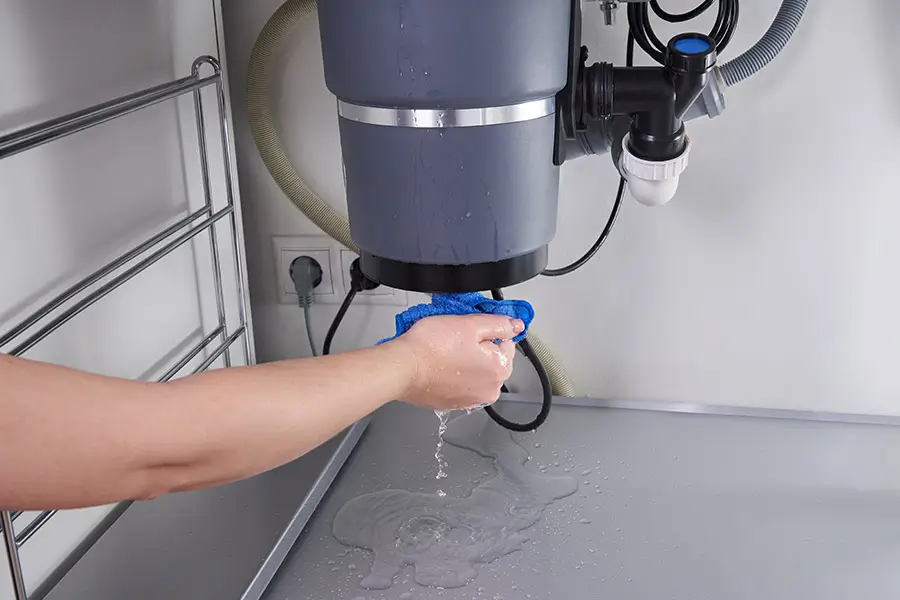
Noticing water damage under your sink is never a welcome surprise. If you’ve traced the source to your garbage disposal and found the leak coming from the bottom of the unit, something has failed internally and it won’t resolve on its own. The longer it goes unaddressed, the greater the risk of secondary water damage to your cabinet, flooring, and surrounding plumbing connections.
At Complete Comfort Heating, Air & Plumbing, we provide plumbing services throughout the Columbus area and regularly diagnose and repair garbage disposal issues for homeowners across the city. Whether you’re near Tipton Lakes or out toward the Columbus Municipal Airport, here’s what our technicians commonly find when a disposal is leaking from the bottom, and what it means for your unit.
What Causes Garbage Disposal Leaks in Columbus?
A leak at the bottom of a garbage disposal points to an internal failure. Unlike leaks at the top or sides, which often involve connection points or the flange where the unit meets the sink, bottom leaks typically indicate a problem with the internal seals or the housing itself. Several specific issues can be responsible.
Loose or Failed Internal Seals
Garbage disposals contain multiple seals and gaskets that keep water contained within the unit during operation. These components hold up well under normal use, but they do wear out over time. Once a seal cracks or loses its integrity, water finds a path out, most commonly through the bottom of the unit. Seal replacement requires disassembly of the disposal and is a job for a qualified technician.
Cracked Motor Housing
The motor housing is the outer shell that encases your disposal’s internal components. It can develop cracks from years of vibration, impact damage, or simple age-related wear. When the housing cracks, water that should remain contained inside the unit seeps through and drips from the bottom. A cracked housing almost always means the unit needs to be replaced rather than repaired.
Poor Installation
A disposal that wasn’t installed correctly from the start, or that was installed by a contractor cutting corners on connection quality, can develop leaks within months or within a few years as the initial wear takes its toll. In Columbus homes where the disposal has been in place since a renovation or a recent move-in, it’s worth having a professional assess whether the installation meets proper standards if leaks appear earlier than expected.
Excessive Corrosion
Even with durable construction, garbage disposals are exposed to constant moisture and food waste, which creates conditions for corrosion over time. Rust can eat through both the housing and the internal seals, which is one of the primary reasons disposals typically have a service life of eight to fifteen years. If corrosion has set in, cleaning and patching are not reliable long-term solutions.
Flange Issues Contributing to Internal Damage
The flange is the connection point between your disposal and the sink drain above it. While a loose or failing flange typically causes leaks at the top of the unit, flange problems that go unaddressed can accelerate food buildup, corrosion, and housing damage that eventually shows up as a bottom leak. Even when the visible leak is at the bottom, it’s worth having a technician inspect the flange as part of a complete assessment.
A Damaged Impeller
Most garbage disposals don’t use sharp blades. Instead, they use impellers, dull rotating components that force food waste outward into a shredder ring using centrifugal force. When an impeller is damaged, it can crack the housing or create enough vibration to loosen internal seals over time. Impeller issues are not something to investigate independently. The internal components of a disposal involve both mechanical and electrical risks that require a qualified technician to handle safely.
Other Signs Your Garbage Disposal Needs Professional Attention
A bottom leak is one of the more obvious signs of disposal trouble, but it’s worth staying alert to other indicators before the problem reaches that point. Based on what we see in service calls throughout Columbus, these warning signs often precede a full failure:
- Unusual grinding, humming, or rattling sounds during operation
- Frequent clogs that occur even with routine food waste
- Persistent foul odors that cleaning doesn’t resolve
- Difficulty processing food that the unit previously handled without issue
- Frequent resets or power failures
- The unit tripping the circuit breaker when activated
- The housing feeling unusually hot to the touch after running
Any of these patterns suggest the unit is under stress. Addressing them early through professional service is almost always more cost-effective than waiting until water damage compounds the problem.
How to Extend the Life of Your Garbage Disposal
Routine care significantly reduces how often disposals develop serious problems. Here are the practices our technicians consistently recommend for Columbus homeowners looking to protect their investment.
Annual Professional Maintenance: Having your disposal inspected as part of a broader plumbing checkup each year gives a technician the opportunity to catch worn seals, early corrosion, or loose connections before they develop into leaks. It also keeps the disposal operating efficiently and helps identify when a unit is nearing the end of its reliable service life.
Run the Disposal Regularly: Running your disposal every few days, even when it isn’t needed, helps prevent internal components from seizing up and keeps debris from hardening inside the unit. Always run cold water when operating it to prevent overheating.
Be Selective About What Goes In: Many disposal failures trace back to what goes into the unit. Items that consistently cause damage include:
- Small bones and seafood shells, which damage the impeller
- Fibrous vegetables like celery or kale, which can tangle internal components
- Grease, fat, and cooking oil, which don’t harm the disposal itself but will clog your drain lines quickly
Keep the Unit Clean: Regular cleaning every two weeks prevents the kind of buildup that accelerates corrosion and causes persistent odors. Grinding ice cubes, using baking soda and vinegar, or adding citrus peels are all effective options for routine maintenance. For more stubborn buildup, a professional cleaning will reach areas that home methods don’t.
Our drain cleaning services cover more than just standard drains, and our plumbing team can address buildup issues throughout the connected pipe system as well.
When Repair Isn’t Enough: Considering Replacement
Not every disposal problem warrants repair. If your unit has a cracked housing, significant internal corrosion, or is approaching ten or more years of service, replacement is often the more practical and cost-effective decision. A new unit comes with updated seals, improved motor efficiency, and a manufacturer warranty that a repaired older unit simply can’t match.
Our team can evaluate your disposal’s current condition and give you an honest assessment of whether repair or replacement makes more sense for your home and your budget. For broader plumbing concerns connected to the disposal, our plumbing repair services address everything from pipe connections to water damage remediation.
Protecting Your Columbus Home’s Plumbing
A leaking garbage disposal is rarely just a minor nuisance. Left unresolved, it creates water damage, mold risk, and the potential for larger plumbing repairs down the road. At Complete Comfort Heating, Air & Plumbing, our technicians have the experience to diagnose the problem accurately and resolve it efficiently, whether that means a targeted repair or a full replacement.
If your disposal is leaking or showing signs of trouble, don’t wait for the damage to spread. Contact our team today to schedule a professional plumbing assessment in Columbus and get the problem handled right.