
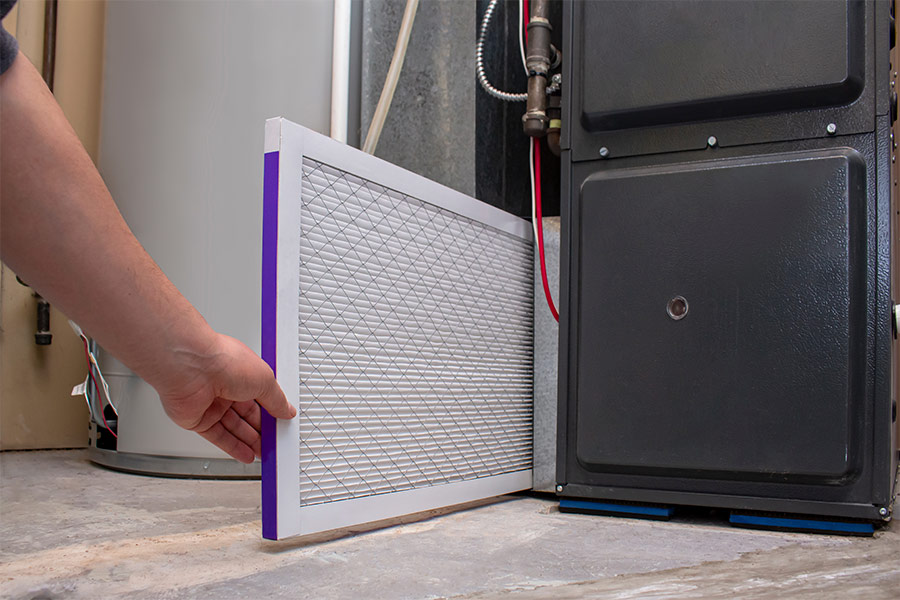
Running a furnace without a filter allows dust, dander, and debris to coat the blower motor, burners, and heat exchanger directly. The result is reduced efficiency, higher energy bills, premature component wear, and unfiltered particles circulating through every room of your home.
Royalton delivers pleasant summers with highs around the mid-eighties, but the seasonal swing here is dramatic. Those same afternoons give way to winter days topping out near thirty-four degrees, with overnight lows sliding toward eighteen. That is when the furnace runs hardest, and when the choice to operate it without a filter does the most damage in the shortest time.
At Complete Comfort Heating, A/C & Plumbing Repair, we work around the clock providing heating services in nearby Carmel and the surrounding communities. Below, our team explains what a filter actually protects and how to keep it doing that job.
What Does a Royalton Furnace Filter Actually Do?
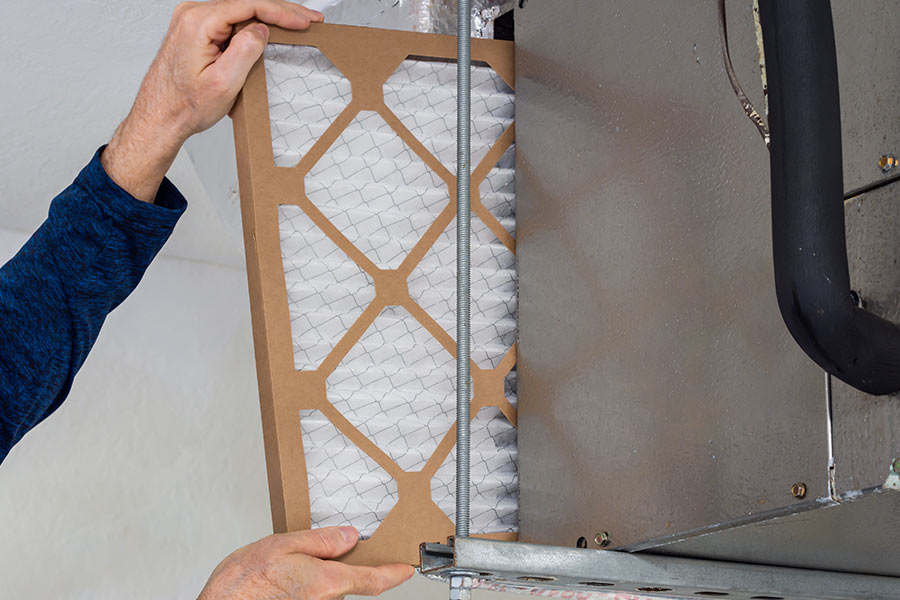
A furnace filter is a panel of pleated or spun media that sits in the airflow path ahead of the blower. As the blower motor draws household air into the system, that air passes through the filter media first, where dust, pet dander, pollen, textile fibers, and other airborne particles get trapped on the surface.
Here is the distinction that surprises most homeowners. A furnace filter’s primary engineering purpose is protecting the equipment, not purifying your air. Improved air quality is a genuine and welcome secondary benefit, but the filter exists first and foremost to keep debris off the blower wheel, the heat exchanger, and the evaporator coil sitting above the furnace for your cooling system.
That is worth understanding because it changes the calculation. Skipping a filter for a few weeks does not just mean dustier air temporarily. It means particles reaching internal components where nobody will see them accumulate until performance drops.
Where Is the Filter Located in Your Home?
Filter placement varies by system design, and homeowners frequently look in the wrong spot.
Common locations include:
A slot or tray inside the blower compartment door on the furnace itself
The junction where the return air duct meets the furnace cabinet
A dedicated filter grille mounted in a wall or ceiling on the return side
A sliding compartment next to an air handler in systems configured that way
Some homes have more than one return, which means more than one filter, and a filter grille in a hallway ceiling gets forgotten for years at a time. If you are unsure how many filters your system has or where they sit, a technician can identify all of them during a service visit and note the correct size for each.
What Happens if There Is No Filter in the Furnace?
The consequences fall into two categories, one affecting the equipment and one affecting the people living with it.
Your Unit Struggles With Internal Debris
Without a filter, debris enters the cabinet continuously and settles on every surface inside. On the blower wheel, accumulated dust throws off the balance of a component spinning thousands of times per minute, which produces vibration and eventually bearing failure. Motors that depend on clean operation begin drawing more current to turn the same load.
The audible symptoms tend to arrive in a predictable order. Grinding or banging points toward a blower assembly fighting buildup. Clicking or repeated popping often traces to a fouled ignition system struggling to light. A low rumbling frequently indicates burners carrying a layer of debris that disrupts the flame pattern.
That last one carries real risk. Dirty burners can produce an irregular flame that impinges on the heat exchanger, and heat exchanger cracks are the primary pathway for carbon monoxide entering living space. This is not a maintenance inconvenience. It is a safety issue.
Efficiency declines throughout. The system runs longer to produce the same indoor temperature, energy costs climb, and components including the evaporator coil, motor windings, and control board absorb strain they were never designed to carry. A furnace that should reach the upper end of its fifteen to twenty year expected lifespan can lose years off that figure through accumulated damage that no single repair reverses. Prompt furnace repair in Royalton after the first unusual noise costs considerably less than the cascade of failures that follows ignoring it.
Your Family Breathes Unfiltered Air
Royalton sits as an unincorporated community in Boone County near Zionsville, and the broader area generally posts reasonable air quality readings. Local conditions still vary considerably. Homes near agricultural land, along the Michigan Road corridor, or in households with multiple pets carry a substantially higher particulate load than a national average suggests.
Without filtration, those particles cycle through the ductwork and back into living space repeatedly. You will notice dust settling on shelves and furniture faster than it should, and visible debris discharging from supply registers.
The health effects are well documented and include:
Irritation such as watery eyes, coughing, and sneezing
Aggravated asthma symptoms and more frequent allergy episodes
Increased susceptibility to respiratory infections
Breathing difficulty related to circulating mold and fungal spores
Households with children, older adults, or anyone managing a respiratory condition feel this most acutely, particularly during the winter months when windows stay shut and the same indoor air recirculates for weeks. Layered indoor air quality solutions such as media air cleaners, UV treatment, and humidity control build on what a filter starts, though none of them substitute for having a filter in place.
How Often Should a Furnace Filter Be Replaced?
Replacement intervals depend heavily on filter thickness, which is where generic advice tends to mislead people.
One inch fiberglass or pleated filters. Every one to three months. These are the most common and the fastest to load up.
Four to five inch media cabinet filters. Every six to twelve months. The greater surface area holds far more debris before restricting airflow.
Washable or electrostatic filters. Cleaned monthly per the manufacturer’s direction, and fully dried before reinstallation.
Shorten those intervals when the house includes shedding pets, ongoing renovation work, a smoker, or occupants with allergies. Boone County springs bring a heavy pollen load, and systems in homes surrounded by open field tend to load filters noticeably faster than the schedule on the packaging suggests.
A clogged filter creates its own set of problems. Restricted airflow forces the blower to work against pressure it was not designed for, the heat exchanger runs hotter than intended, and the high limit switch begins shutting the burner down repeatedly. Homeowners often describe this as the furnace blowing cool air or cycling on and off constantly. Left long enough, the same restriction can crack a heat exchanger.
Does a Higher MERV Rating Mean a Better Filter?
Not automatically, and this is where good intentions cause damage.
MERV ratings measure how effectively a filter captures particles, running from roughly 1 to 16 in residential applications. Higher numbers trap smaller particles, which sounds like a straightforward upgrade. The complication is that denser media also restricts airflow, and residential furnaces are engineered around a specific range of static pressure.
Installing a filter rated well above what your system can handle produces the same symptoms as a clogged one. Reduced airflow, longer run times, a strained blower motor, and in cooling season a frozen evaporator coil. Most standard residential systems perform well in the MERV 8 to 13 range, with the right target depending on your equipment and duct design.
If you want meaningfully better filtration than a one inch filter provides, the correct approach is a media cabinet with greater surface area rather than a denser filter in the existing slot. A technician can measure static pressure and tell you what your system will actually tolerate.
When Filter Problems Point to Something Larger
Use a simple test to decide whether the filter is the whole story or just the visible part of it.
If replacing a loaded filter restores normal airflow and quiet operation, the filter was the issue and a consistent replacement schedule solves it. If a new filter turns gray within weeks, something else is introducing debris, often leaking return ductwork pulling air from a crawlspace or attic. If noises persist after replacement, or if the system continues short cycling, internal components have already accumulated buildup that a filter cannot remove.
Annual furnace maintenance is what catches all three scenarios before the heating season tests them. Blower cleaning, burner inspection, heat exchanger examination, and airflow measurement are the parts of the job a filter change cannot cover.
Filtering Out the Rest in Royalton
Running a furnace without a filter is one of the few HVAC mistakes that damages the equipment and the household air at the same time, and both effects compound quietly. The fix is inexpensive relative to what it prevents. Confirm where every filter in your home sits, match the size and MERV rating to what your system can handle, and replace on a schedule appropriate to the filter thickness and your household conditions.
Complete Comfort Heating, A/C & Plumbing Repair carries over 200 five-star reviews, and our team handles filter selection and installation, blower motor cleaning, furnace noise diagnostics, and full heating service throughout Royalton, Zionsville, Carmel, Indianapolis, and the surrounding communities. When your system needs a proper look before the next cold snap, book a furnace inspection and our technicians will handle the rest.
Frequently Asked Questions About Furnace Filters
Can I run my furnace for one night without a filter?
A single night causes limited harm, though it is not risk free. Debris that reaches the blower wheel or heat exchanger stays there permanently. If a filter is unavailable, running the system briefly is better than losing heat in freezing weather, but replace it as soon as possible rather than treating it as normal operation.
Why does my filter get dirty so quickly?
Rapid loading usually indicates high particulate levels or a duct problem. Pets, renovation dust, and agricultural surroundings all accelerate it. If a fresh filter darkens within two or three weeks, leaking return ducts may be pulling unconditioned air from an attic or crawlspace, which a technician can locate and seal.
Will a dirty filter make my furnace blow cold air?
Yes, indirectly. A clogged filter restricts airflow, the heat exchanger overheats, and the high limit switch shuts down the burner while the blower keeps running. You feel cool air from the registers. Repeated cycling like this stresses the heat exchanger and should be addressed immediately.
What size furnace filter do I need?
The correct size is printed on the frame of your current filter, listed as nominal dimensions such as sixteen by twenty-five by one inch. Nominal and actual dimensions differ slightly, so match the printed size rather than measuring. If no filter is present, a technician can determine the correct size for your cabinet.
Does a furnace filter help with allergies?
It helps, though it is not a complete solution. Standard filters capture larger pollen grains and dust, while smaller allergens pass through at lower MERV ratings. Households with significant allergy concerns typically see better results from a media cabinet air cleaner sized to the system, combined with humidity control.