
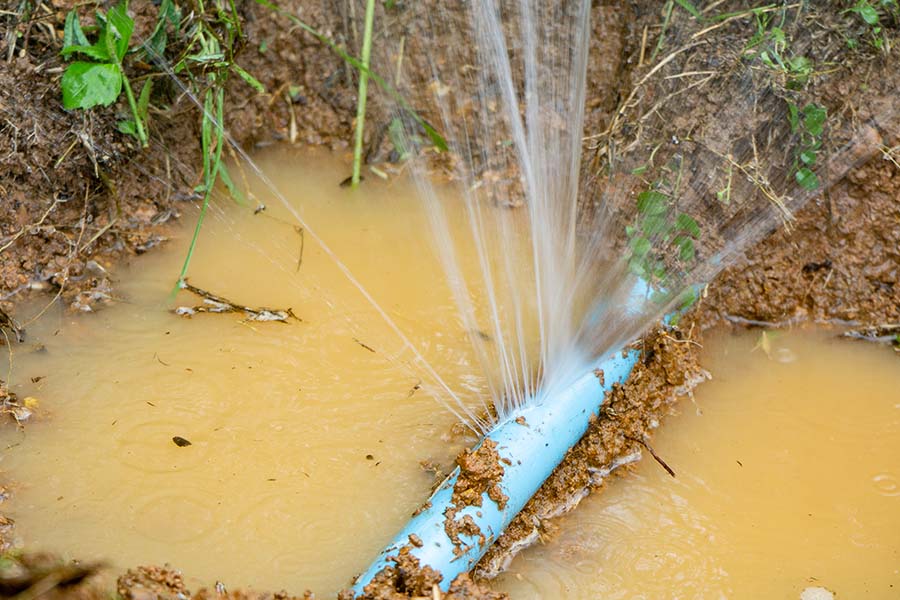
Water leaks that you can see are straightforward to address. A dripping faucet, a puddle under the sink, or a running toilet are problems you can point to and call a plumber about. The leaks that cause the most damage are the ones you cannot see. Hidden water leaks inside walls, under floors, in ceilings, and behind appliances can go undetected for months or even years while slowly destroying the structural materials around them and driving utility costs higher with every billing cycle.
In Fishers, where homes range from established neighborhoods near 116th Street to newer construction in Saxony and Britton Falls, hidden leaks are not rare. They show up in homes of all ages for different reasons, and the consequences of finding them late are consistently more expensive than the consequences of finding them early.
This guide covers the signs that a hidden water leak may be present in your Fishers home and what to do when you suspect one.
Watch Your Water Meter
One of the most reliable ways to identify a hidden leak is to check your water meter directly. Choose a period of two to three hours when no water is being used in the home, which means no faucets running, no appliances operating, no toilets flushing. Check the meter reading at the start of the period, leave the water completely unused, and check again at the end.
If the meter reading has changed, water is moving through your system somewhere it should not be. The size of the change gives a rough sense of how significant the leak is, but even a small movement in the meter during a period of zero intended use confirms that water is escaping somewhere in the system.
This test does not tell you where the leak is, but it tells you with certainty whether one exists. That confirmation is the right starting point before calling a plumber for a more detailed inspection.
Monitor Your Water Bills
A water bill that climbs steadily over several months without any corresponding change in household usage is one of the most common first indicators of a hidden leak. The increase is often gradual enough that it gets attributed to rate changes or seasonal variation rather than a leak, which is exactly why it gets missed for so long.
Pull your water bills from the past six to twelve months and look at the usage figures rather than just the total amount. Consistent month-over-month increases in gallons used, particularly during periods when household activity has not changed, point toward a continuous leak somewhere in the system.
Working in homes across Fishers, unexplained water bill increases are one of the most frequent reasons homeowners contact us for a plumbing inspection. In many cases, a hidden leak has been active for months before the pattern in the bills draws attention to it.
Look for Staining and Discoloration on Walls and Ceilings
Water that leaks inside a wall or above a ceiling does not stay contained to the immediate area of the pipe. It migrates along framing members, insulation, and drywall paper before it becomes visible at the surface. By the time a stain appears on your wall or ceiling, the water has often been present in the surrounding materials for a significant period of time.
Brownish or yellowish staining on ceilings is often the first visible sign of a leak from a bathroom or kitchen above, a roof penetration, or a supply line running through the ceiling framing. Similar staining on walls, particularly near the base of walls or around window frames, can indicate a supply line leak inside the wall cavity or water intrusion from outside.
Bubbling or peeling paint and wallpaper are also signs of moisture behind the surface. Paint that bubbles without an obvious cause, or that has peeled in a pattern that follows a seam or a corner, suggests water has been working its way through the drywall from behind.
Check for Soft Spots and Warping in Flooring
Flooring materials respond to moisture in consistent ways. Hardwood floors that develop soft spots, cupping, or buckling in areas not near exterior doors or windows are responding to moisture from below, typically from a supply line or drain leak under the subfloor. Tile grout that cracks or tiles that shift in a bathroom floor can indicate water has compromised the substrate beneath.
In Fishers homes with finished basements, water staining or dampness on the concrete floor or the lower sections of the basement walls can reflect either a foundation moisture issue or a supply line or drain leak above. A plumber with leak detection equipment can help distinguish between a plumbing leak and a moisture intrusion issue.
Soft spots in drywall near the base of walls, particularly in bathrooms and kitchens, often indicate a slow leak from a supply stop valve, a drain connection, or a toilet base seal that has been failing gradually.
Pay Attention to Mold and Mildew in Unexpected Places
Mold requires two things to grow: organic material and moisture. Drywall, wood framing, and insulation provide the organic material. A hidden water leak provides the moisture. When mold appears in locations that are not normally damp, such as inside a wall cavity, on the back of drywall, or under flooring, it is almost always the result of a water source that has been present long enough for mold to establish itself.
A musty odor in a room that has no obvious source is often the first sensory indicator of mold growing behind a surface. If a room consistently smells musty regardless of how much it is cleaned or ventilated, and there is no visible mold on exposed surfaces, the mold is likely behind the walls or under the floor.
Based on what we see in Fishers properties, hidden leak damage that has progressed to mold growth requires both the plumbing repair and, in many cases, professional remediation of the affected building materials. The total cost of addressing a leak at that stage is significantly higher than it would have been if the leak had been detected earlier.
Inspect Under Sinks and Behind Appliances Periodically
Many hidden leaks are not truly hidden. They are in accessible spaces that simply go unlooked for extended periods. The interior of kitchen and bathroom cabinets under sinks, the space behind the refrigerator, the area behind the washing machine, and the floor around the water heater are all locations where slow leaks can develop and accumulate damage over months without anyone noticing.
Making a habit of opening the cabinet doors under every sink in the home a few times per year and actually looking at the condition of the supply lines, drain connections, and the cabinet floor takes only a few minutes. The supply lines that connect shutoff valves to faucets and toilets are among the most common locations for slow leaks in residential plumbing. Braided stainless supply lines have a service life of approximately five to ten years, and many homes in Fishers have lines that are well past that range.
A supply line that fails suddenly can release a significant volume of water in a very short time. Checking these lines periodically and replacing any that show bulging, corrosion, or staining at the connection points is straightforward preventive maintenance that a plumber can address during a routine visit.
Check for Unexplained Foundation or Slab Moisture
Homes in Fishers built on slab foundations have supply lines running through or beneath the concrete. When these lines develop a leak, water migrates through the slab and can appear as persistent dampness on the floor surface, warm spots on the floor if the leak involves a hot water line, or the sound of water running when all fixtures are off.
Slab leaks are among the more complex plumbing repairs because accessing the pipe requires either cutting through the concrete or rerouting the line through the walls and ceiling. They are also among the most damaging if left unaddressed because the moisture released beneath the slab can affect the foundation over time.
If you notice unexplained moisture on a slab floor, a section of floor that feels warmer than the surrounding area, or the sound of water movement when nothing in the home is in use, a professional leak detection visit is the appropriate response. A technician with acoustic leak detection equipment can locate the source without unnecessary demolition.
What to Do When You Suspect a Hidden Leak
If the signs above are present in your home, the right next step is a professional plumbing inspection rather than an extended period of monitoring. Hidden leaks do not improve on their own. The moisture continues to accumulate, the damage to building materials continues to expand, and the water usage continues to climb on every bill until the source is found and repaired.
A licensed plumber with leak detection equipment can locate the source of a hidden leak accurately and efficiently. Modern leak detection uses acoustic listening devices, thermal imaging, and in-line camera inspection to find leaks without opening walls unnecessarily. For plumbing repair that involves hidden leaks, accurate detection is what allows the repair to be targeted and the disruption to the home to be minimized.
Once the source is located and repaired, a thorough assessment of the surrounding materials gives you a clear picture of whether any remediation is needed and what the full scope of the damage is.
Preventing Hidden Leaks Through Routine Maintenance
The most effective way to limit the damage hidden leaks can cause is catching them before they have had time to do significant damage. Annual plumbing inspections that include a check of supply lines, shutoff valves, water heater connections, and accessible drain lines give a technician the opportunity to identify components that are showing early signs of failure before they release water into your home.
For Fishers homeowners who want that level of ongoing visibility into their plumbing system’s condition, scheduling a water heater and plumbing inspection as part of regular home maintenance is one of the more practical investments available. The cost of a routine inspection is a fraction of the cost of addressing water damage that has been developing undetected for months.
Knowing the location of your main water shutoff valve is also worth the time it takes. If a hidden leak is suspected or a supply line fails suddenly, being able to shut off the water supply to the entire home immediately limits how much damage occurs before a plumber arrives.
Protecting Your Fishers Home From Hidden Water Damage
Hidden water leaks are solvable problems, but the window between early detection and significant damage is narrow. The signs described above give you a practical framework for identifying when something may be wrong beneath the surface of your home before the damage becomes visible and costly.
At Complete Comfort Heating, Air & Plumbing, our plumbing technicians serve homeowners throughout Fishers and Hamilton County with the diagnostic tools and experience to find hidden leaks accurately and repair them thoroughly. We approach every inspection with honesty and a commitment to protecting your home the right way.
If you suspect a hidden leak or want a professional assessment of your plumbing system’s current condition, contact our team today to schedule a visit and get the answers you need.