
We're Hiring!



Greenwood sits at the southern edge of the Indianapolis metro in Johnson County, and the homes here reflect a concentrated wave of residential development from the 1970s through the 2000s that has created a community where a large share of furnaces are hitting their wear window at the same time. Complete Comfort Heating, Air & Plumbing serves Greenwood homeowners with furnace repair that identifies what is actually wrong and fixes it without manufacturing additional work.
We offer 24/7 emergency service throughout Greenwood and the surrounding area because furnace failures in Indiana do not limit themselves to convenient hours, and neither does our team.
Greenwood’s long heating season and the age of its residential housing stock create conditions where furnaces that have been running reliably for years begin to show strain in ways that are easy to overlook. These are the signals that should not be written off as normal behavior.
In a Greenwood home where the furnace may have been installed during the home’s original construction in the 1980s or 1990s, these signals often indicate that a system is entering the final phase of its reliable service life. A clear-eyed assessment from a technician gives homeowners the information they need to plan ahead rather than react in a crisis.
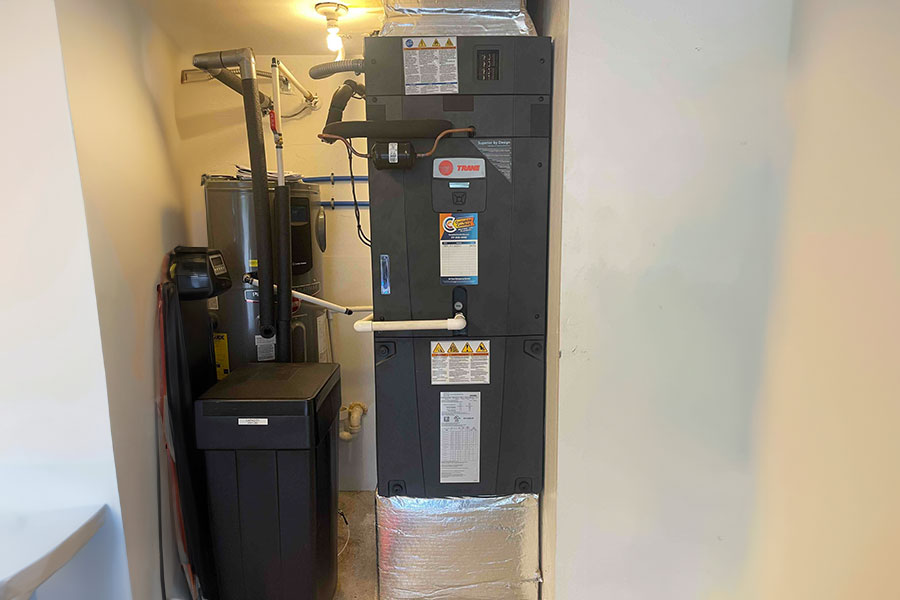
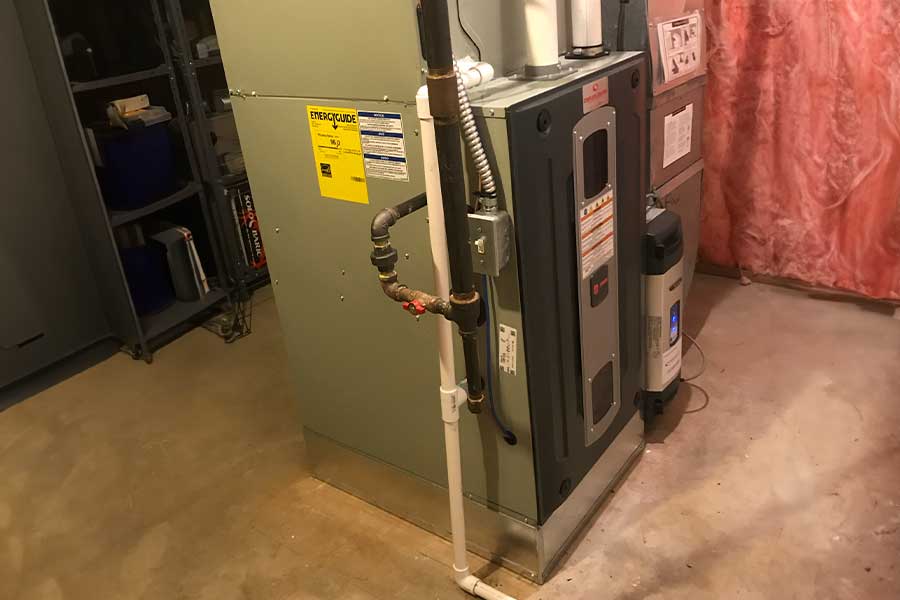
Johnson County’s humid continental climate delivers the full range of what central Indiana winters can produce, from brief early-season cold snaps in October to sustained below-freezing stretches in January and February that push furnaces to run near their capacity for days at a time. For Greenwood homes built during the 1980s and 1990s, those demand periods accelerate wear on components that were already approaching their design life limits, and the failures that result are rarely clean single-cause events.
What we most consistently find in Greenwood furnaces is a combination of worn ignition components and restricted airflow working together to produce the symptoms homeowners report. A hot surface ignitor that is partially degraded may still light the burner most of the time, but when paired with a filter that has not been changed in four months, the marginal airflow triggers the high-limit switch and turns a slow ignitor into a short-cycling furnace. Separating the contributing factors is what makes the repair stick, and that requires a technician who does not stop diagnosing at the first thing they find.
Complete Comfort provides full-scope furnace repair for Greenwood homeowners across all system types and ages. Our technicians are trained to work on everything from older single-stage systems in homes built during Greenwood’s early growth decades to the high-efficiency two-stage units that replaced them over the years. Every visit begins with a complete diagnostic so we understand the system before we repair it.
Our Greenwood services cover ignition system assessment and replacement, heat exchanger inspection and combustion safety verification, high-limit and pressure switch diagnostics, blower motor and capacitor testing, gas valve evaluation and manifold pressure measurement, inducer motor assessment, control board diagnostics, flue integrity inspection, and condensate system service on high-efficiency units. We do not recommend part replacements until we have confirmed those parts are the problem, and we provide clear pricing before any work begins.

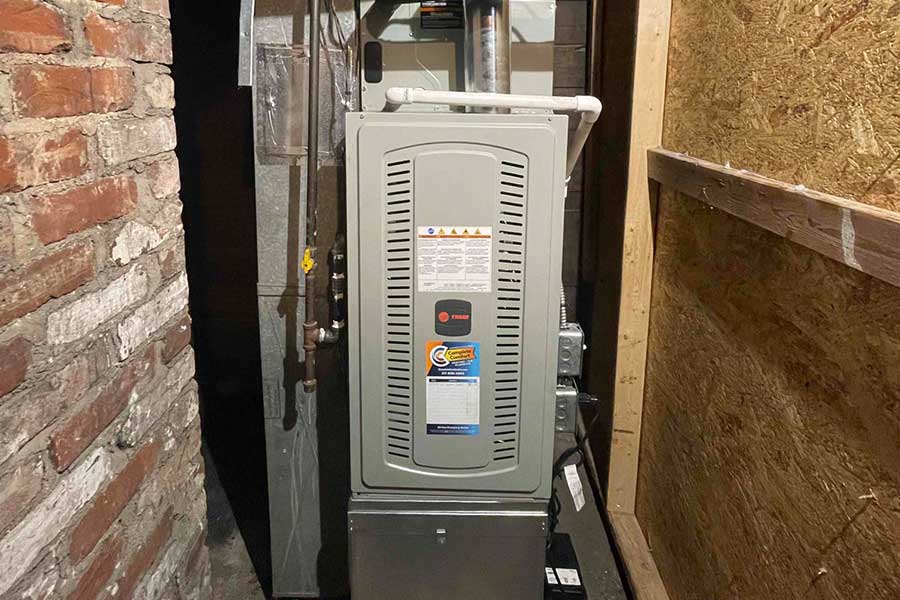
We received a call from a homeowner named Teresa on a Sunday evening in mid-January after her furnace had been short-cycling all day and her home had dropped to sixty-one degrees despite the thermostat being set to seventy. The system was a 1997 single-stage furnace that had been in the home since original construction.
Our technician found a filter so clogged it had partially collapsed against the blower cabinet, nearly blocking return air entirely. That alone would have caused short-cycling through the high-limit switch, but the technician continued the diagnostic and found a hot surface ignitor measuring resistance at the high end of its functional range, indicating it was close to failure. Both issues were addressed during the same visit. Teresa’s furnace had been working fine for twenty-six years through regular filter changes, but the previous filter had been in place for over six months. The combination of a neglected filter and a worn ignitor on an aging system was enough to shut things down on the coldest weekend of the winter. Filter on a monthly schedule and a new ignitor, and the system ran through the rest of the season without incident.
Greenwood homeowners have dealt with enough contractors to know the difference between someone doing the job right and someone doing the job fast. We do both. Here is what you get when you call Complete Comfort.
We take pride in the work we deliver to Greenwood homeowners and stand behind every repair we complete in this community.

Long-running furnaces often fail when multiple components reach their wear limits around the same time rather than one part failing in isolation. An ignitor that has been degrading slowly, combined with a filter that went too long between changes and elevated static pressure from a partially closed return, can collectively push a system past its operational threshold in a way that no single factor would have caused alone.
Hold the filter up to a light source. A new filter will allow light to pass through relatively evenly. A heavily loaded filter will block most of the light and may feel stiff or show visible debris loading on the surface. If the filter is difficult to see through, it is past due for replacement and should be changed before running the furnace further.
Yes. Blower motor capacitors can fail, particularly in older systems. A failing capacitor may cause the blower to hum without starting, to run more slowly than normal, or to draw excess current that trips the motor’s thermal protection. It is a relatively inexpensive component but requires accurate diagnosis to distinguish from a failing motor, since both can produce similar symptoms.
High-limit switches typically trip between 150 and 200 degrees Fahrenheit depending on the furnace model. Under normal operating conditions with proper airflow, heat exchanger surfaces run significantly below these thresholds. When airflow is restricted, surface temperatures can approach and exceed limit thresholds within minutes, which is why the switch is a critical safety device rather than just an operational convenience.
Cold outdoor air is dry, and when it infiltrates or is ventilated into a home and heated, the relative humidity drops significantly. Very dry indoor air makes the space feel cooler than the thermostat reading suggests, which leads many homeowners to raise the thermostat and run the furnace harder. Adding a whole-home humidifier allows the thermostat to be set lower while maintaining the same comfort level, reducing furnace runtime and heating costs.