
We're Hiring!



Martinsville sits at the edge where central Indiana’s flat glaciated landscape gives way to the rolling terrain of Morgan County, a location that shapes both how homes here were built and how hard their heating systems have to work. Complete Comfort Heating, Air & Plumbing serves Martinsville homeowners with furnace repair that takes those local realities into account from the moment we arrive at the door.
We offer 24/7 emergency furnace service because Martinsville winters can turn severe quickly, and homes in this part of Morgan County have no shortage of cold-night heating demands that cannot wait until the next business day.
Martinsville’s housing ranges from historic properties near the downtown courthouse to mid-century neighborhoods and more recent construction on the city’s edges, and furnace warning signs show up across all of them as the heating season progresses. These are the symptoms that deserve attention rather than a wait-and-see approach.
In a city where the housing stock spans nearly a century of construction, these symptoms can have very different causes depending on the age and type of system involved. Accurate diagnosis is the starting point for any repair that holds up, and it is how we begin every service call in Martinsville.

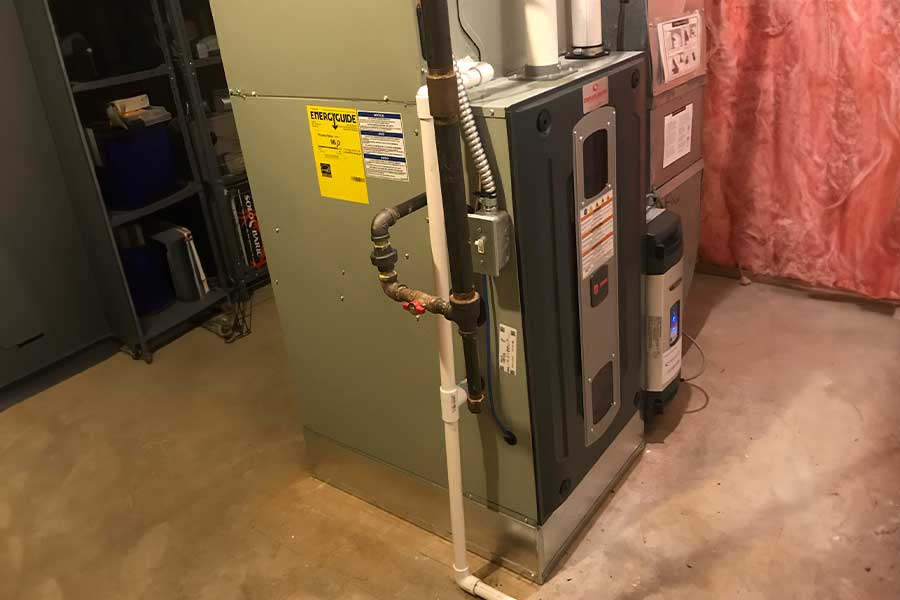
The terrain around Martinsville creates wind exposure conditions that differ from the flatter communities to the north. Homes on higher ground along the city’s ridgelines deal with more aggressive winter wind loading against the building envelope, which increases infiltration and heating demand beyond what the furnace’s rated output was necessarily sized to accommodate. That additional load is real and persistent through every heating season, compressing the effective service life of components that in a more sheltered home might last several years longer.
White Lick Creek runs through the Martinsville area, and neighborhoods near the lower elevations of the creek corridor experience the basement moisture conditions that come with proximity to a waterway. Furnaces in those homes deal with elevated humidity in the mechanical space year-round, which accelerates oxidation on burner assemblies, heat exchanger surfaces, and flue pipe connections in ways that are not reflected in the system’s rated service life. Our technicians approach Martinsville service calls with these environmental factors in mind, because a repair that does not account for why a component failed will not stay fixed for long.
Complete Comfort handles furnace repairs across the full range of system types found in Martinsville homes, from older standing-pilot configurations in historic properties to modern high-efficiency units in newer construction. Every visit begins with a complete diagnostic that takes the home’s construction era, duct system condition, and mechanical space environment into account before any repair recommendation is made.
Our Martinsville repair services cover ignition system diagnostics and repair, heat exchanger inspection and combustion safety analysis including CO testing, burner cleaning and gas pressure verification, inducer motor and draft pressure switch assessment, blower motor service and airflow testing, flue and venting integrity inspection, control board diagnostics, and condensate system service for high-efficiency units. We explain findings clearly and confirm pricing before beginning any work on your system.
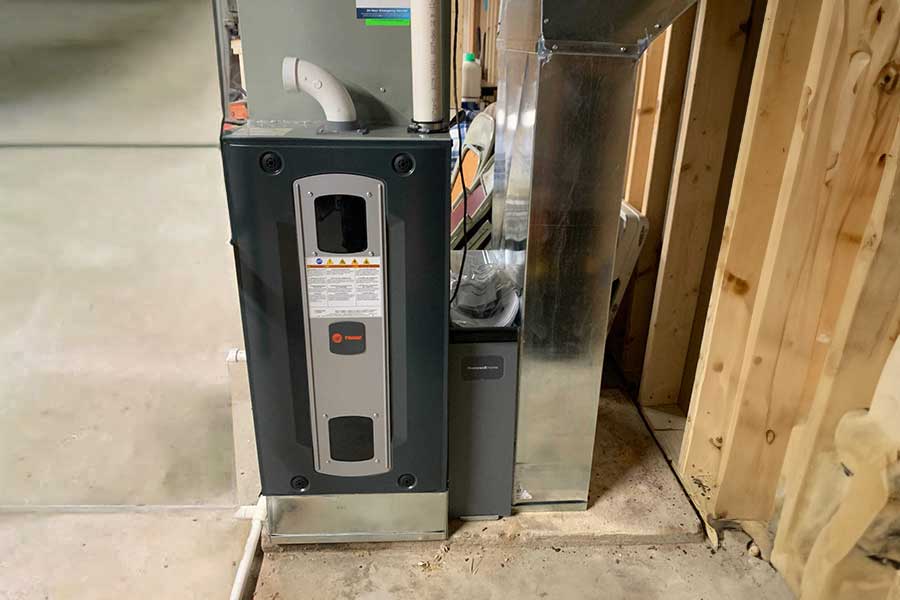

We responded to a call from a homeowner named Robert on a Thursday in late January after his furnace had stopped producing adequate heat two days into a sustained cold stretch. The home was a 1960s ranch on one of the city’s older streets, with the original furnace long since replaced by a system installed about fourteen years prior. The furnace was running, but the house was holding at sixty-three degrees with the thermostat set to seventy.
Our technician found corroded burner ports restricting combustion output, consistent with years of operating in a basement that had measurable humidity from a crawl space connection. Cleaning the burners improved combustion efficiency noticeably, but the combustion analysis also showed carbon monoxide levels in the exhaust stream that were higher than they should have been even with clean burners. A closer inspection found a small separation in the secondary heat exchanger where the flue gases were passing. We shut the system down, explained the safety findings to Robert in plain terms, and walked him through his replacement options without pressure. He made his decision the following day, and we had a new system installed within forty-eight hours. The original issue looked like a heating performance problem. The underlying issue was a safety concern that the performance call allowed us to catch.
Martinsville homeowners value service that is direct, capable, and honest about what it finds. That is what we bring to every call. Here is what you get from our team.
We are proud to serve Martinsville and committed to delivering the complete comfort every Morgan County homeowner deserves through every season.

Proximity to waterways tends to mean higher ambient humidity in basement and crawl space areas where furnaces are typically installed. Elevated moisture accelerates oxidation on burner assemblies, heat exchangers, and flue metal. Furnaces in high-humidity mechanical spaces often reach heat exchanger and combustion component wear faster than their rated service life would suggest, making annual inspection more important than in drier environments.
Carbon monoxide production does not always correspond to visible damage. A heat exchanger crack that is small or in a location not easily seen can allow combustion gases to enter the circulated airstream without obvious visual evidence. Combustion analysis using a calibrated instrument measures actual CO levels in the airstream and can detect exchanger compromise that a visual inspection would miss.
Homes on elevated or exposed terrain experience higher infiltration rates from winter wind loading against the building envelope, increasing the volume of cold air that enters through gaps around windows, doors, and penetrations. This raises the effective heating load beyond what a flat, sheltered home of the same size would require, and furnaces in these locations run more frequently and longer to compensate.
A brief, light dusty smell during the first heating cycle of the season is normal as accumulated dust on heat exchanger surfaces burns off. A persistent burning odor that continues past the first few cycles, a smell of plastic or rubber, or a sulfur or exhaust smell are all reasons to shut the system down and have it inspected rather than running it until the smell goes away on its own.
Elevated CO in the flue gas stream indicates incomplete combustion, which can result from dirty burners, incorrect gas pressure, inadequate combustion air supply, or a compromised heat exchanger. The specific reading and pattern helps a technician identify the likely source. Any CO level above acceptable thresholds should be investigated and resolved before the system is returned to service.