
We're Hiring!



Needham is a rural Johnson County community where most properties sit on acreage, homes are spread out rather than stacked together, and when a furnace fails in January there is no nearby neighbor to knock on and no municipal utility to call. Complete Comfort Heating, Air & Plumbing serves Needham with the responsive, capable furnace repair that rural homeowners need: technicians who show up prepared, diagnose accurately, and do not leave until the heat is back on.
We offer 24/7 emergency service because a heating failure on a rural property in a Johnson County winter is as urgent as any call we take, and we treat it that way.
Rural properties in Needham carry specific heating vulnerabilities that suburban homes do not. Longer distances between the furnace and the far corners of the structure, less shelter from prevailing winds, and in some cases crawl spaces or uninsulated outbuildings that the ductwork passes through all put additional demand on the heating system. These warning signs are worth acting on promptly in this environment.
On a rural property where the next service call window might be hours away in a weather event, catching these signals early matters more than in a densely populated suburb. Do not wait on symptoms that are telling you something.
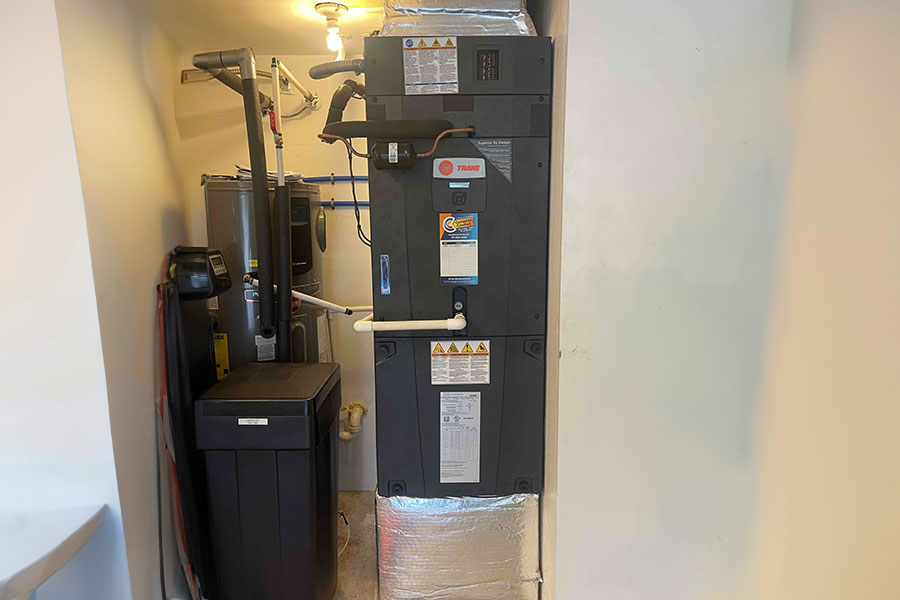
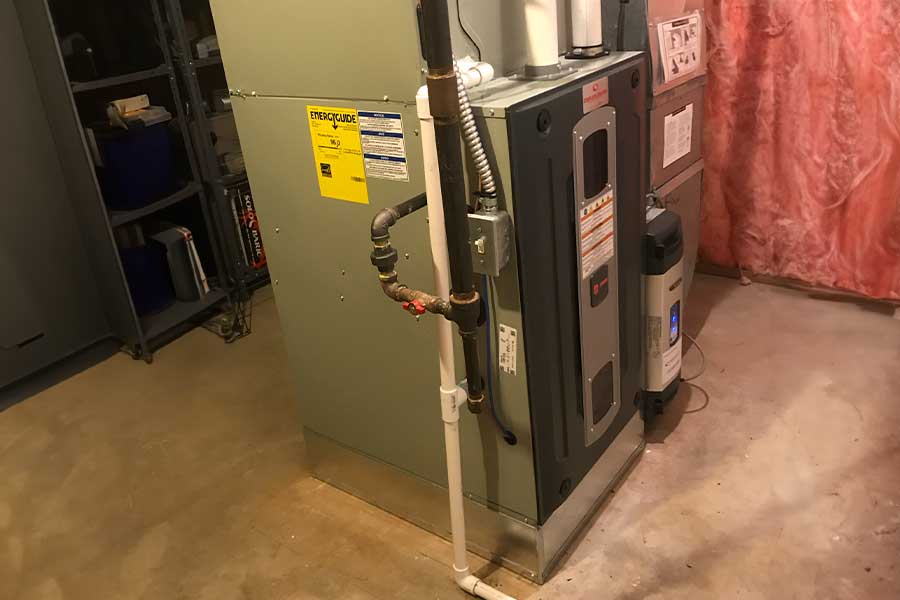
Rural homes in Needham carry a set of furnace risk factors that are largely absent in suburban construction. Propane supply systems, common on properties outside the natural gas distribution network, introduce a different set of pressure and valve considerations than municipal gas. Propane pressure regulators can freeze or malfunction in extreme cold, starving the furnace of adequate fuel at precisely the moment demand is highest. Our technicians are experienced with both fuel types and approach propane-fired systems with the specific diagnostic steps those configurations require.
The structures themselves also differ from suburban builds in ways that affect furnace performance. Older farmhouses with low insulation values, large unheated spaces, and ductwork that passes through exterior walls or uninsulated crawl spaces lose heat rapidly during sustained cold and demand more from the furnace than its rated output was designed to deliver continuously. When that demand is combined with a system approaching or past its service life, the result is a furnace that runs nearly nonstop and still cannot keep the house warm.
Complete Comfort provides furnace repair throughout Needham and the surrounding rural Johnson County area, with technicians equipped for both natural gas and propane systems. Every service call starts with a complete diagnostic that accounts for the specific fuel type, structure type, and distribution conditions of each rural property rather than treating all furnaces as interchangeable.
Our Needham repair services cover propane and natural gas ignition system diagnostics and repair, heat exchanger inspection and combustion safety analysis, gas valve and pressure regulator testing for both fuel types, burner cleaning and manifold pressure verification, inducer motor and draft switch diagnostics, blower motor service and duct condition assessment, control board testing, and flue and venting integrity inspection. We carry parts for both fuel types and communicate clearly before any repair work begins.
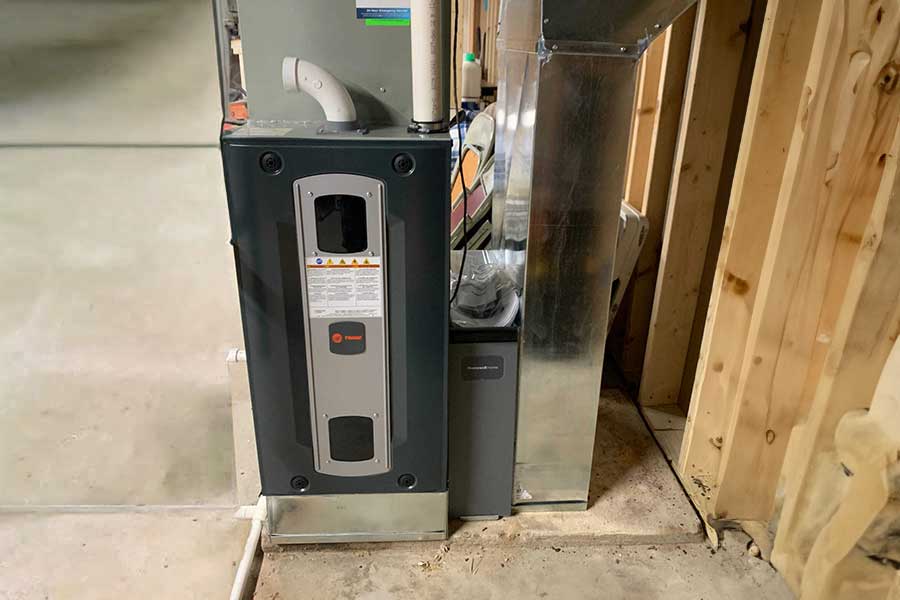
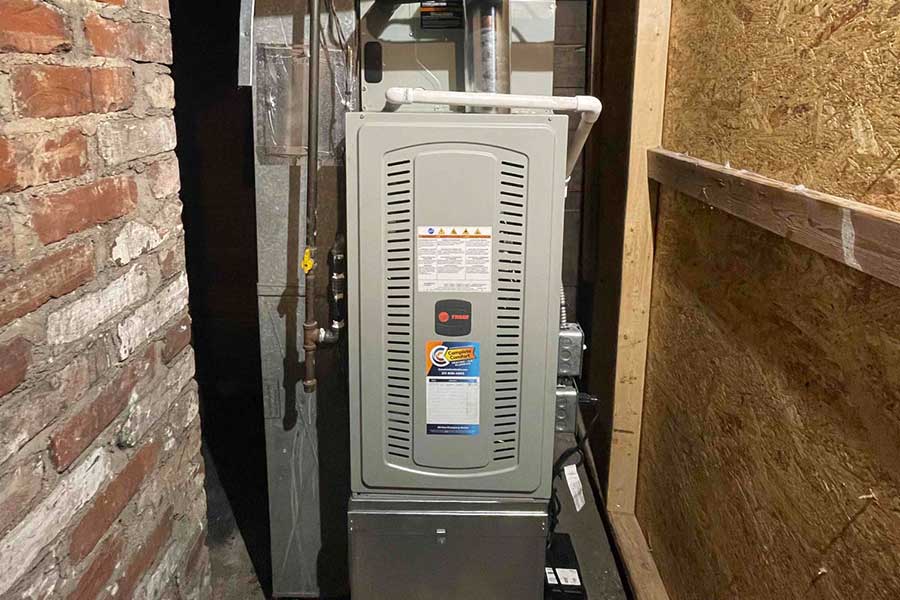
We got a call from a homeowner named Dale on a Sunday morning in late January after his propane furnace had stopped firing. The home was a 1970s farmhouse on several acres, and the temperature inside had dropped to fifty-two degrees by the time he called. He had checked the propane tank and confirmed it had fuel, so a supply issue was not obvious.
Our technician arrived and found the second-stage regulator on the propane supply line had partially frozen and was not allowing full gas pressure to pass through to the furnace. The temperature the previous night had dropped to single digits, which was cold enough to affect the regulator given its age and the moisture that had accumulated around it over the years. We thawed and tested the regulator, confirmed supply pressure was restored at the furnace, and ran the system through several full cycles before leaving. We also identified that the regulator was corroded enough to warrant replacement before the next hard freeze. Dale had the regulator replaced the following week. A two-dollar component failure had dropped a farmhouse to fifty-two degrees overnight, and knowing where to look for it made the repair fast rather than drawn out.
Rural homeowners in Needham need a furnace company that comes prepared for what rural properties actually involve. We do not show up expecting a suburban setup and improvise from there. Here is what you get from Complete Comfort.
We serve Needham and the surrounding Johnson County area with the same commitment to quality and reliability that every homeowner deserves regardless of how far off the main road they live.
Yes. Propane supply line regulators can freeze in extreme cold, particularly if moisture has accumulated around the regulator body or if the regulator is aging and its internal components have degraded. A frozen regulator restricts or blocks gas flow to the furnace, causing ignition failure or inadequate heat output despite a full propane tank. Replacing an aging regulator before winter is a straightforward preventive measure.
Propane and natural gas require different burner orifice sizes and different manifold pressures, so a technician must verify the system is configured correctly for the fuel type in use. Propane supply pressure can vary based on tank level, outdoor temperature, and regulator condition in ways that municipal gas pressure does not, which means supply-side testing is a more significant part of the diagnostic on a propane system.
Ducts passing through uninsulated crawl spaces or exterior walls lose heat to the surrounding cold environment before the conditioned air reaches the living space. This reduces the effective heat delivery from each cycle and forces the furnace to run longer and more frequently to compensate. Insulating those duct runs directly reduces heat loss and eases the demand on the furnace.
Propane combustion produces carbon monoxide, and using a propane heater indoors without adequate ventilation is a serious safety risk. If you must use supplemental heat while waiting for a repair, use an electric space heater in a single room and ensure your CO detectors are functioning. Contact an HVAC technician for emergency service rather than relying on combustion appliances not designed for indoor use.
Annual inspection is the standard recommendation, and for furnaces in rural homes that run extended hours to compensate for low insulation values or large heated volumes, that frequency is especially important. A heat exchanger in a high-runtime environment accumulates thermal fatigue faster than one in a well-sealed suburban home, and the inspection is the only way to detect developing cracks before they become a safety issue.