

Most plumbing problems do not start with a single catastrophic event. They develop gradually, driven by small habits repeated day after day until pipes corrode, drains clog, and fixtures fail in ways that feel sudden but have been building for years. The frustrating part is that many of these habits feel completely harmless, which is exactly why they continue.
In Bloomington, where a mix of older homes near Indiana University and newer construction in areas like the Tapp Road corridor creates a wide range of plumbing conditions, the habits that damage pipes in a century-old home look different from those affecting a system installed five years ago. But across all of them, the same patterns show up consistently in our service calls throughout Monroe County.
Here is a straightforward look at the everyday habits that do the most damage to residential plumbing in Bloomington, and what a better approach looks like for each one.
Pouring Grease and Cooking Oil Down the Drain
This is one of the most common and most damaging habits in any kitchen. Grease and cooking oil feel liquid when they are hot, which makes the drain seem like a reasonable destination. The problem is that grease cools and solidifies as it moves through the pipes. Over time, layer after layer of solidified grease accumulates on pipe walls, narrowing the passage until water barely moves through and a blockage becomes inevitable.
This problem compounds in homes where multiple cooking habits over years have added to a buildup that no amount of hot water or dish soap will fully clear. In severe cases, the only solution is professional hydro-jetting or drain cleaning to remove what has accumulated deep in the line.
The right approach is to let grease cool in the pan, pour it into a container, and dispose of it in the trash. It is a small habit change that prevents one of the most predictable plumbing problems we see in Bloomington homes.
Treating the Toilet as a Trash Can
Toilets are designed to handle human waste and toilet paper. Nothing else. Flushing items like wipes, cotton balls, paper towels, feminine hygiene products, dental floss, or medication might seem harmless in the moment, but these materials do not break down in the plumbing system the way toilet paper does.
Wipes deserve particular attention here. Even products labeled “flushable” are known to cause blockages in residential plumbing and municipal sewer systems. They do not disintegrate quickly enough to pass through the system without accumulating at bends, joints, and other transition points in the line.
Dental floss is another surprisingly damaging item. It does not break down at all and tends to wrap around other debris inside pipes, creating a net that catches additional material and builds a blockage over time.
Working in homes across Bloomington, toilet-related clogs that trace back to non-flushable materials are among the most common plumbing calls we run. A simple rule of thumb is that if it is not toilet paper, it belongs in the trash.
Running the Garbage Disposal Without Enough Water
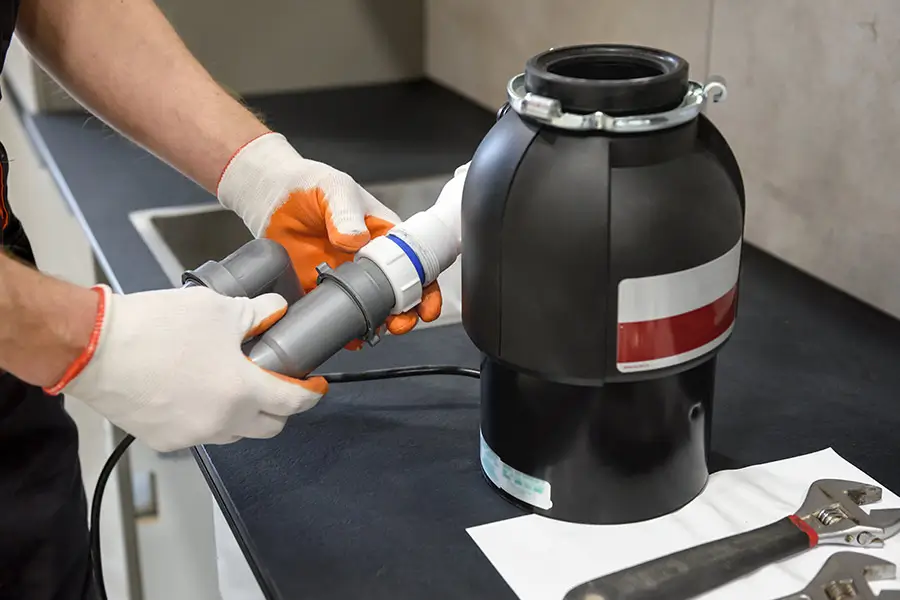
A garbage disposal is a useful appliance, but it is frequently misused in ways that damage both the disposal itself and the drain line it connects to. Running the disposal without a steady flow of cold water is one of the most common mistakes. Water is what carries the ground waste through the drain and further into the line. Without sufficient water, ground material accumulates near the disposal outlet and in the pipe immediately downstream, leading to buildup and odor over time.
Cold water is specifically important because it keeps fats and grease in a solid state as they move through the line, which makes them easier to flush through without coating the pipe walls. Hot water softens fats and increases the likelihood that they will coat the inside of the drain as they cool further down the line.
A few other disposal habits worth changing include putting fibrous vegetables like celery and artichoke leaves into the unit, which can wrap around the grinding mechanism, and grinding large quantities of starchy foods like pasta or rice, which absorb water and can form a paste-like mass in the drain.
Ignoring Small Leaks
A faucet that drips once every few seconds, a toilet that runs briefly after flushing, a small wet spot under a cabinet that appears and then dries up. These feel like minor annoyances, and many Bloomington homeowners put them on a mental list of things to address eventually without treating them as genuine problems.
What a slow drip or small leak actually represents is ongoing water exposure to materials that are not designed for it. Cabinet floors and walls absorb moisture over months and years. Subflooring under a slow leak from a supply line under a sink can develop rot that does not become visible until a repair has become significantly more involved. A running toilet wastes water continuously and can indicate a flapper or fill valve that is failing in a way that will eventually stop working entirely.
Scheduling plumbing repair for small leaks when they are noticed rather than deferred is the difference between a straightforward fix and a repair that has grown to include water-damaged materials around the original problem.
Using Chemical Drain Cleaners Regularly
Chemical drain cleaners are widely available and feel like a convenient solution to a slow drain. What most homeowners do not know is that the harsh chemicals in these products, primarily lye or sulfuric acid based formulas, do not discriminate between the clog and the pipe itself. They generate heat as a byproduct of the chemical reaction that clears the blockage, and that heat can warp PVC pipes and accelerate corrosion in older metal pipes.
Regular use of chemical drain cleaners in a home with older plumbing, which is common in Bloomington neighborhoods near campus and in the established residential areas off College Avenue, contributes to pipe degradation that becomes expensive to address over time.
A better approach is to address slow drains with a professional drain cleaning service that removes the actual buildup from the pipe without damaging the pipe itself. For recurring slow drains, the underlying cause is worth identifying rather than repeatedly treating the symptom with chemicals.
Putting Too Much Pressure on Fixtures
Leaning on a faucet handle to turn it off harder than necessary, cranking a shutoff valve past its natural stopping point, or using force when a fixture is not cooperating are habits that seem minor but cause cumulative damage to the components involved. Faucet handles and valve seats are designed to seal at a certain point. Forcing them past that point damages the sealing surfaces and creates the dripping or seeping that seems to develop for no reason.
Bathroom fixtures in older Bloomington homes are particularly susceptible to this. Valve seats and washers in aging faucets are often already worn, and the extra force applied habitually accelerates the failure of the remaining material holding them together.
If a faucet is difficult to turn off completely or a valve does not seat properly with normal force, that is a signal that service is needed, not a reason to apply more pressure.
Neglecting Water Pressure That Runs Too High
High water pressure feels like a luxury in the shower, but it creates ongoing stress throughout the entire plumbing system. Every joint, fitting, appliance connection, and fixture in the home is subject to that elevated pressure every time water is in use. Over time, high pressure accelerates wear on supply line connections, valve seats, and the internal components of appliances like washing machines and dishwashers.
The standard recommended residential water pressure in Indiana falls between 40 and 60 psi. Anything consistently above 80 psi is considered damaging to residential plumbing systems. Many homes in Bloomington, particularly those on the higher end of a water main where pressure can be less regulated, run at pressures higher than they should.
A pressure reducing valve, installed by a licensed plumber at the main supply line, brings pressure down to a safe range throughout the home. It is a relatively inexpensive installation that protects every component downstream from unnecessary stress.
Skipping Annual Plumbing Inspections
A plumbing system that is not actively causing visible problems can still be developing issues that a professional inspection would catch early. Slow leaks behind walls, early-stage corrosion on older pipe connections, water heater components approaching failure, and supply line hoses showing wear are not apparent from the outside but are exactly the kinds of things a technician can identify before they become emergencies.
Based on what we see in Bloomington properties, the homes that experience the most significant plumbing damage are almost always ones where deferred maintenance allowed small issues to develop into larger ones without intervention. Annual or biannual plumbing inspections are among the most cost-effective ways to stay ahead of that pattern.
For homeowners in Bloomington interested in a comprehensive look at their plumbing system’s current condition, scheduling a plumbing inspection in Bloomington is the right starting point.
Protecting Your Plumbing in Bloomington
The habits described above are common precisely because they do not feel harmful in the moment. But plumbing systems respond to what they are subjected to over time, and the difference between a system that functions well for decades and one that requires repeated repairs often comes down to the small choices made every day.
At Complete Comfort Heating, Air & Plumbing, our plumbing team helps Bloomington homeowners identify what is working against their systems and address it before it becomes a serious problem. We offer honest assessments, professional service, and a commitment to getting the job done right the first time.
If you have concerns about your plumbing or want to get a clear picture of where things stand, contact our team today to schedule a visit and protect the plumbing investment in your Bloomington home.