
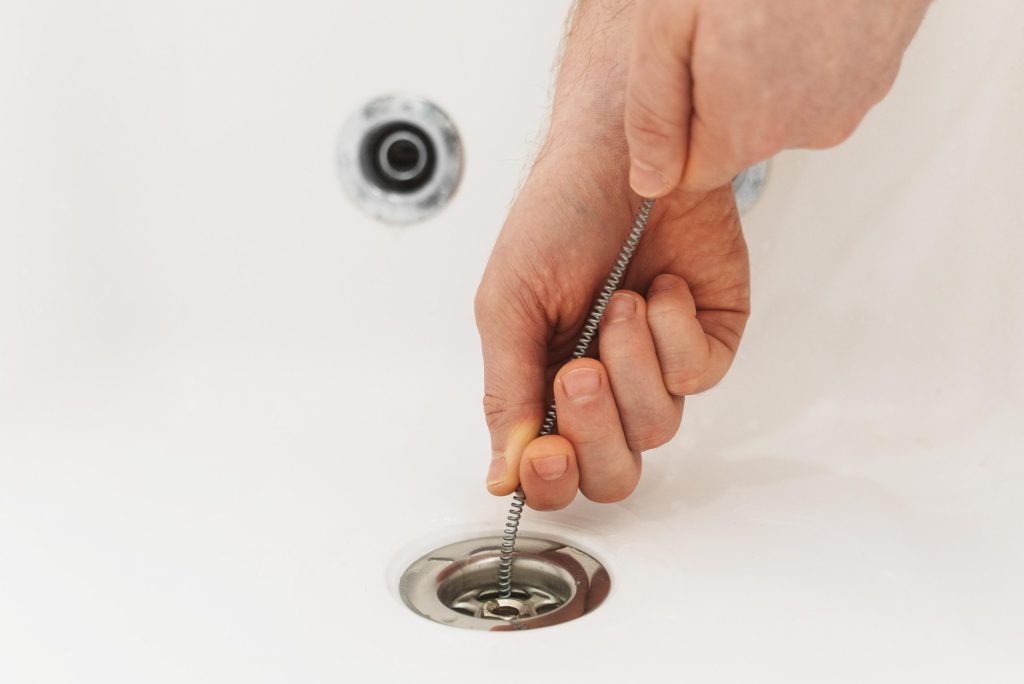
A slow-draining sink is one of those problems that starts as a minor inconvenience and gradually becomes impossible to ignore. Water pools while you wash your hands, the kitchen sink takes minutes to empty after doing dishes, and no matter how many times you run hot water down the drain, the problem keeps coming back. In most cases, a slow drain is not a mystery. It has a specific cause, and that cause gets worse the longer it goes unaddressed.
In our service calls throughout Brownsburg, slow drains are among the most common plumbing complaints we handle, showing up in homes across neighborhoods like Arbor Hills, Cardinal Pointe, and the newer subdivisions along US-136. Understanding what is behind the problem is the first step toward getting it resolved properly and keeping it from returning.
Here is a breakdown of the most common reasons sinks drain slowly in Brownsburg homes and what each one means for your plumbing.
Hair and Soap Buildup in Bathroom Drains
Bathroom sink drains are the most frequent location for slow drain complaints, and the cause is almost always the same: a combination of hair and soap residue that has accumulated on the drain stopper, in the P-trap, or further down the drain line.
Hair does not dissolve in water. It collects on any surface it can catch on inside the drain, and once a small amount accumulates, it acts as a net that captures more hair, soap scum, toothpaste residue, and other debris with every use. Over weeks and months, that buildup thickens and restricts flow until water drains at a fraction of the rate it should.
This type of clog tends to sit close to the drain opening, which makes it tempting to address with a wire or a chemical product. Chemical drain cleaners are not a recommended solution because they damage pipe interiors over time, particularly in homes with older plumbing. A professional drain cleaning removes the actual obstruction completely and without damaging the pipe walls.
Grease and Food Residue in Kitchen Drains
Kitchen sinks slow down for a different reason. Cooking grease, oils, and food particles that go down the drain do not travel cleanly through the pipe and out of the system. Grease in particular cools and solidifies as it moves through the line, leaving a coating on the interior pipe wall with every occurrence. Food particles bond to that coating, and over time the effective diameter of the drain pipe shrinks.
Working in homes across Brownsburg, kitchen drain slowdowns that have been developing for a year or more often involve significant buildup that extends well past the P-trap and into the drain line running toward the main stack. Hot water and dish soap provide temporary relief at best because they move the surface layer of grease further down without removing the deeper accumulation.
The right solution is professional drain cleaning that clears the line from the drain opening to the point where it connects to the larger drain system. For kitchen drains with years of grease accumulation, hydro-jetting is often the most effective method because it removes buildup from the pipe walls rather than simply pushing it further downstream.
A Partially Blocked P-Trap
The P-trap is the curved section of pipe directly beneath your sink that holds a small amount of water to prevent sewer gases from entering the home. It is also a natural collection point for debris because of its curved shape. Small objects that fall down the drain, accumulations of hair and soap, food particles, and mineral deposits can all settle in the P-trap and restrict flow.
A slow drain caused by a P-trap blockage will often have a partial flow rather than no flow at all, which can make it easy to dismiss as something that will clear itself. It rarely does. The blockage in the trap tends to grow rather than diminish with continued use.
A plumber can clear a P-trap obstruction quickly. In some cases, an older P-trap that has accumulated significant scale or corrosion is worth replacing at the same time rather than cleaning a component that is nearing the end of its useful life.
Mineral Buildup From Hard Water
Hendricks County, like much of central Indiana, has hard water. Water with high mineral content leaves calcium and magnesium deposits on every surface it contacts, including the interior walls of drain pipes. Over time, these mineral deposits narrow the pipe opening and create a rough surface that catches and holds other debris more readily than a clean pipe would.
Mineral buildup is a slow, gradual process that tends to become noticeable only after years of accumulation. It affects the entire plumbing system over time, not just individual drains, and it is more common in homes that have not had water treatment systems installed.
A water treatment solution that addresses the hardness of the incoming water supply can slow the rate of mineral accumulation throughout the plumbing system. For drains that already have significant scale buildup, professional cleaning removes the existing deposits and restores proper flow.
Venting Problems in the Drain System
Every drain in your home connects to a vent system that allows air into the drain lines to keep water flowing smoothly. When the vent system is blocked or functioning improperly, drains slow down because the negative pressure created by flowing water has no way to equalize. The result is sluggish drainage, gurgling sounds from the drain, and sometimes bubbling in nearby fixtures when a sink or toilet is used.
Vent blockages can result from debris accumulation at the vent opening on the roof, a bird’s nest, ice formation during winter months, or in some cases a vent pipe that was improperly installed. Venting issues affect multiple drains simultaneously rather than a single fixture, which is one of the ways to distinguish them from a localized clog.
Diagnosing and clearing a vent problem requires access to the vent stack and the tools to inspect and clear it. This is not a repair that can be approached without proper equipment and experience.
A Deeper Blockage in the Main Drain Line
When a single sink is draining slowly, the blockage is typically localized to that fixture’s drain. When multiple fixtures in different parts of the house are all draining slowly at the same time, or when using one fixture causes gurgling or backup in another, the blockage may be further down in the main drain line rather than in any individual fixture’s pipe.
Main line blockages in Brownsburg homes are often caused by root intrusion from trees and shrubs seeking moisture in the sewer line, accumulated grease and debris that has moved past individual drain lines and collected further downstream, or in older homes, a section of pipe that has deteriorated or shifted.
A main line blockage does not respond to the same approach as a localized clog. Camera inspection of the drain line is the correct first step because it confirms the location and nature of the obstruction before any clearing method is selected. For plumbing repair involving the main line, having an accurate picture of what is in the pipe and where it is located is what allows the repair to be done correctly the first time.
Why Slow Drains Should Not Be Ignored
The most common mistake homeowners make with a slow drain is waiting to see if it improves on its own or treating it repeatedly with store-bought chemical products. Slow drains do not improve on their own. The restriction grows over time, and chemical treatments that partially clear a clog leave residue behind that makes the next blockage form faster.
A slow drain that becomes a fully blocked drain is a more disruptive and more expensive problem than the slow drain itself. A kitchen sink that goes from sluggish to completely blocked, or a bathroom drain that backs up entirely, requires more involved clearing than a drain that was addressed while flow was still partially present.
Based on what we see in homes across Brownsburg, the homeowners who address slow drains promptly spend less on plumbing service over time than those who defer until the situation becomes urgent.
Getting Your Drains Flowing Properly in Brownsburg
Slow drains are fixable problems, and in most cases they are more straightforward to resolve than they might seem. The key is addressing them with the right approach for the actual cause rather than a temporary fix that leaves the underlying issue in place.
At Complete Comfort Heating, Air & Plumbing, our plumbing technicians serve homeowners throughout Brownsburg and Hendricks County with honest assessments and professional drain service that gets results. Whether the issue is a localized clog, mineral buildup, or something deeper in the line, we diagnose accurately and repair thoroughly.
If your sink is draining slowly and you are ready to get it resolved properly, contact our team today to schedule a visit and get your drains back to working the way they should.