

Ductless mini split systems have become an increasingly popular choice in Fishers homes over the past several years, and for good reason. They offer precise zone control, eliminate the energy losses associated with ductwork, and can handle both heating and cooling with a single system. But like any HVAC equipment, a mini split operates at its best only when it is properly maintained and free of the problems that quietly chip away at performance over time.
In our service calls throughout Fishers, from established neighborhoods near 116th Street to newer developments in the Saxony and Britton Falls areas, mini split efficiency complaints follow a consistent pattern. The system is still running, still producing conditioned air, but the output does not match what the homeowner expects, and energy costs are higher than they should be. In most cases, one or more of the six issues below is responsible.
1. Dirty Air Filters and Indoor Unit Components
The indoor air handling unit of a ductless mini split has filters that capture dust, pet dander, and other airborne particles before they coat the internal components. Unlike a central HVAC system where the filter is a separate, easy-to-access component, mini split filters are integrated into the indoor unit itself and are frequently overlooked.
When these filters become clogged, airflow across the evaporator coil is reduced. The coil cannot absorb heat from the room effectively, the system runs longer cycles to reach the set temperature, and energy consumption rises. In more severe cases, the restricted airflow causes the coil to ice over, which further reduces performance and can damage the compressor over time.
Most mini split manufacturers recommend cleaning the indoor unit filters every two to four weeks during periods of heavy use. Beyond the filters, the evaporator coil, blower wheel, and drain pan inside the unit all accumulate debris over time and require periodic professional cleaning to maintain full efficiency. Based on what we see in Fishers homes, neglected indoor unit maintenance is the single most common cause of mini split efficiency loss.
2. A Refrigerant Leak
Mini split systems rely on refrigerant to transfer heat between the indoor and outdoor units. A properly installed and maintained system holds its refrigerant charge indefinitely. When refrigerant levels drop, it is because of a leak somewhere in the refrigerant circuit, and that leak affects efficiency in direct and measurable ways.
A system operating with low refrigerant cannot transfer heat at the rate it was designed to. It runs longer to achieve the same result, compressor stress increases, and cooling or heating output drops noticeably. Because the performance decline is gradual rather than sudden, a slow refrigerant leak can go undetected for months while steadily driving up energy costs and accelerating wear on the compressor.
Refrigerant handling requires EPA Section 608 certification, which means this is strictly a job for a licensed technician. A professional can check the system’s refrigerant pressure, locate the source of a leak, make the repair, and restore the system to its correct charge. For AC repair in Fishers, IN that involves a refrigerant issue, prompt attention prevents the compressor damage that results from running a system in a low-charge condition over an extended period.
3. Improper System Sizing
A mini split system that was not correctly sized for the space it serves will never operate efficiently, regardless of how well it is maintained. An undersized system runs continuously without reaching the set temperature, which drives energy consumption higher and creates accelerating wear on the compressor. An oversized system reaches the set temperature quickly and then short-cycles, turning on and off repeatedly without completing full operating cycles.
Short-cycling is particularly damaging because each startup puts peak electrical and mechanical stress on the compressor. A system that starts and stops far more frequently than it was designed to accumulates wear at a rate that significantly shortens its service life.
Correct sizing for a ductless mini split depends on the square footage of the space, ceiling height, insulation quality, window area and orientation, and local climate conditions. In Fishers, where homes range from older construction with less insulation to newer builds with tighter envelopes, these factors vary considerably from one property to the next.
If your mini split seems to run constantly or cycles on and off in short intervals, a system sizing assessment by a qualified technician is worth scheduling. The problem may be addressed through equipment adjustment, or in some cases, replacement with a properly sized unit that operates within its designed parameters.
4. Obstructed or Poorly Positioned Outdoor Unit
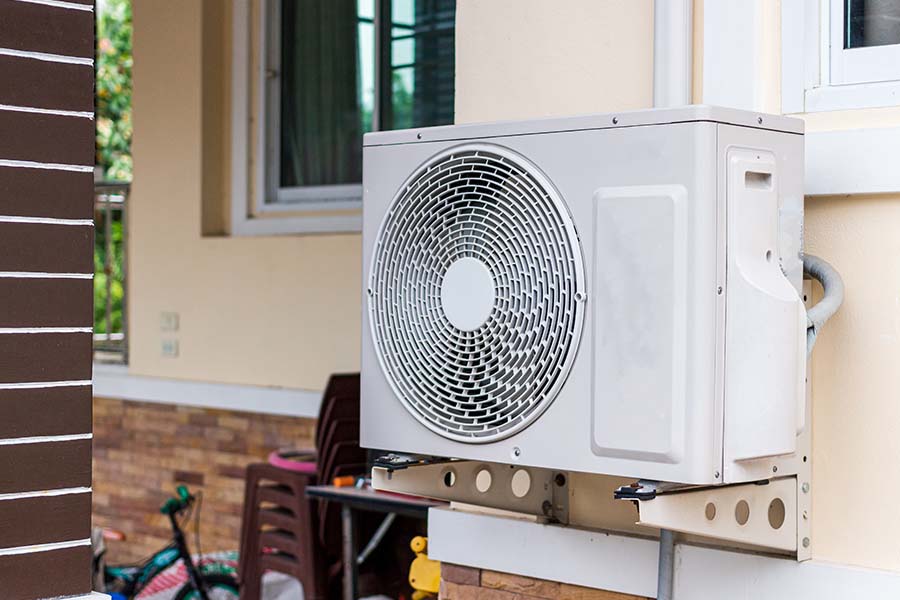
The outdoor unit of a mini split system is where heat is released during cooling mode and absorbed during heating mode. When airflow around the outdoor unit is restricted, its ability to exchange heat with the outside air is compromised, which forces the entire system to work harder to produce the same output.
Common sources of obstruction in Fishers homes include overgrown vegetation that has grown around the unit since installation, debris accumulation on the coil fins, snow or ice buildup during winter months, and units installed in locations that receive inadequate airflow due to fencing, walls, or other structures placed too close.
The outdoor coil itself also accumulates dirt, pollen, cottonwood seeds, and grass clippings over time. A coated outdoor coil cannot exchange heat effectively even with adequate airflow around the unit. Professional cleaning of the outdoor coil as part of regular AC maintenance restores heat exchange capacity and brings system efficiency back in line.
Keeping at least 18 to 24 inches of clearance around the outdoor unit and ensuring it is not positioned in a location that concentrates heat or blocks airflow are the basic conditions the system needs to operate at its rated efficiency.
5. Line Set Issues
The line set is the insulated refrigerant tubing that connects the indoor and outdoor units of a mini split system. It is one of the components that receives the least attention after installation, but its condition has a direct effect on system efficiency.
Insulation on the refrigerant lines degrades over time with UV exposure, temperature cycling, and physical wear. When line set insulation deteriorates, heat exchange occurs along the length of the tubing rather than only at the intended coils. This reduces the efficiency of the refrigerant cycle and increases the amount of energy required to maintain the desired indoor temperature.
Line sets that were installed with excessive length, sharp bends, or inadequate support can also develop issues over time that affect refrigerant flow and system performance. A technician inspecting a mini split system for efficiency issues will assess the condition of the line set insulation and the integrity of the connections at both ends.
6. Thermostat and Control Board Problems
Mini split systems use sophisticated electronic controls to manage compressor speed, fan speed, and operating modes. When the control board or the remote sensor that reads room temperature is malfunctioning, the system may run at incorrect capacity, fail to modulate properly, or operate in a mode that does not match what the thermostat is calling for.
A sensor that reads temperatures inaccurately causes the system to either overshoot or undershoot the set point, leading to unnecessary runtime and energy consumption. A control board with a developing fault may cause erratic behavior that is difficult to pin down without proper diagnostic equipment.
These types of issues are not visible to the homeowner and require a technician with the appropriate diagnostic tools and experience with mini split control systems to identify accurately. Working in homes across Fishers, electronic control issues account for a meaningful share of the mini split efficiency complaints that do not trace back to maintenance or refrigerant problems.
The Role of Regular Professional Service
What all six of these issues share is that they are far more manageable when caught early than when they are allowed to develop over multiple seasons. A mini split system that receives consistent professional attention holds its efficiency rating longer, experiences fewer unexpected failures, and delivers better comfort at lower operating cost than one that runs without service until something goes wrong.
Scheduling an annual inspection and tune-up that covers filter cleaning, coil cleaning, refrigerant pressure verification, electrical component testing, and line set assessment is the most reliable way to keep a mini split operating at its designed efficiency. For Fishers homeowners who want to know exactly where their system stands, a cooling system evaluation gives you a clear picture of current performance and what it would take to optimize it.
Protecting Mini Split Performance in Fishers
A ductless mini split is a significant investment in home comfort, and the efficiency advantages that make it attractive at installation are worth protecting through proper maintenance and timely attention to developing issues.
At Complete Comfort Heating, Air & Plumbing, our technicians are experienced with the full range of ductless mini split systems found in Fishers homes and approach every service call with the thoroughness that protecting that investment requires. We offer honest assessments, transparent recommendations, and service backed by our commitment to doing the job right the first time.
If your mini split is not performing the way it should or you want to make sure it is heading into the season in the best possible condition, contact our team today to schedule a comprehensive inspection and get your system back to full efficiency.