
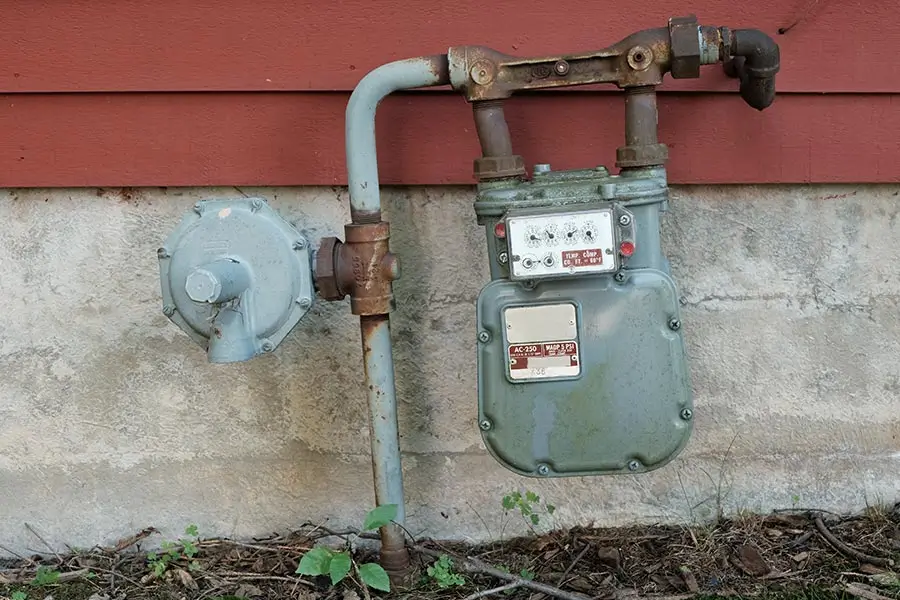
A gas smell inside your home is never something to investigate on your own or wait out to see if it fades. Natural gas and propane are both flammable and can be dangerous in ways that develop faster than most people expect. Knowing exactly what to do in the first few minutes of detecting a gas odor can make a meaningful difference in the outcome for your household and your property.
In Greenwood and throughout Johnson County, homes are served by natural gas lines that connect to furnaces, water heaters, boilers, gas ranges, dryers, and other appliances. Any one of these connections is a potential source of a leak, and the threat is the same regardless of where it originates. This guide walks through the correct response, step by step, and explains what happens after the immediate situation has been addressed.
What a Gas Leak Smells Like
Natural gas in its natural state is odorless. Utility companies add a chemical called mercaptan to the gas supply specifically so that leaks can be detected. Mercaptan produces a sulfur-like smell often described as similar to rotten eggs. If you detect that odor anywhere in your home, treat it as a gas leak until proven otherwise.
Propane, used in some Greenwood area homes not connected to the municipal gas supply, has a similar additive and a comparable odor. Both require the same emergency response.
Do not assume that a faint smell is not serious or that the odor will resolve on its own. Even a small leak is a genuine hazard.
Step 1: Do Not Operate Anything Electrical
The single most important rule in a gas leak situation is to avoid creating any spark or ignition source. Natural gas and propane are flammable within specific concentration ranges, and a spark from any electrical source can be enough to ignite accumulated gas.
This means:
- Do not turn any lights on or off
- Do not use your phone inside the home
- Do not operate any appliances, switches, or thermostats
- Do not open or close the garage door with the automatic opener
- Do not light a candle, match, or lighter for any reason
The instinct to turn on a light to see better or to grab your phone from a charger before leaving is understandable. Both actions carry real risk in a gas leak situation and should be avoided entirely.
Step 2: Leave the Home Immediately
Get everyone out of the home as quickly as possible, including pets. Leave doors open as you exit rather than pausing to close them. The goal is to evacuate without delay and without creating any ignition source on the way out.
Do not stop to collect valuables, change clothes, or finish what you were doing. The evacuation should be immediate and complete.
Once outside, move a safe distance away from the home and any outbuildings connected to the gas supply. Do not re-enter the home for any reason until the gas company has responded and confirmed the situation is safe.
Step 3: Call Your Gas Utility From Outside
Once you are outside and at a safe distance, call your gas utility’s emergency line. In Greenwood, CenterPoint Energy serves most of the natural gas supply. Their emergency line is available 24 hours a day, seven days a week. If you are unsure which utility serves your home, call 911 and they will dispatch the appropriate response.
Use your phone outside, away from the home. If your phone was left inside, use a neighbor’s phone rather than going back in to retrieve yours.
Provide your address clearly and tell the dispatcher that you smell gas inside the home. The utility company will dispatch a technician to locate and shut off the gas supply and assess the source of the leak.
Step 4: Do Not Re-Enter Until Cleared
This step is where many homeowners make a mistake. After calling the gas company and waiting for a response, the temptation to re-enter the home to retrieve something or to check on the situation is strong. Do not act on that temptation.
The gas company technician will assess the situation, locate the source of the leak, and shut off the gas supply if necessary. They will tell you when it is safe to re-enter. Following that guidance is not optional. Re-entering before the all-clear creates risk that the professional response was designed to eliminate.
If the weather is severe or waiting outside is not feasible, go to a neighbor’s home or a nearby public location while you wait for the response.
What Happens After the Gas Company Responds
The gas utility’s role in an emergency is to locate the leak, shut off supply if needed, and confirm whether the home is safe to re-enter. What they do not do is repair the appliances, connections, or plumbing that caused the leak in the first place. That work requires a licensed plumber or HVAC technician depending on where the leak originated.
Common sources of gas leaks in Greenwood homes include:
- Loose or deteriorated connections on gas appliances such as furnaces, water heaters, and dryers
- Corroded gas supply lines inside the home
- Faulty valves at the appliance connection point
- Damaged flexible connectors behind ranges or dryers that have been moved or shifted
- A furnace heat exchanger issue that, while not a true gas line leak, can introduce combustion gases into the home’s air supply
Once the gas company has confirmed the source and shut off supply, a licensed technician needs to inspect the specific equipment or connection involved, make the necessary repair, and verify that the system is safe before the gas is restored and the appliance is returned to service.
For Greenwood homeowners, scheduling that repair promptly matters both for safety and for the practical reality of living without heat, hot water, or cooking capability while the gas supply remains off. A heating repair or plumbing service call following a gas leak response should be treated with the same urgency as the original event.
Carbon Monoxide and Gas Leaks Are Different Hazards
It is worth distinguishing between a gas leak and a carbon monoxide concern, since both involve combustion equipment and both are serious but they require different responses.
A gas leak involves unburned fuel escaping into the home’s air. It has a detectable odor due to the mercaptan additive and poses a fire and explosion risk.
Carbon monoxide is a byproduct of combustion that is produced when fuel burns incompletely. It is colorless and odorless, which is why CO detectors are essential in any home with gas appliances. Carbon monoxide poisoning produces symptoms including headache, dizziness, nausea, and confusion. If your CO detector alarms, the response is the same as a gas leak: evacuate immediately and call 911 from outside.
Having both working smoke detectors and working carbon monoxide detectors in your Greenwood home, tested regularly and with fresh batteries, is one of the most basic and most important safety measures available to any household.
Preventing Gas Leaks Through Regular Maintenance
The most effective way to reduce the risk of a gas leak is keeping the appliances and connections in your home properly maintained by qualified professionals. A furnace that has not been serviced in years, a water heater with aging connections, or a gas range with a deteriorating flex connector are all situations where a developing problem could be identified and corrected before it becomes an emergency.
Scheduling annual heating maintenance that includes inspection of the burner, heat exchanger, and gas connections is a straightforward way to keep your heating system operating safely. The same applies to gas water heaters and other appliances. A technician who knows your equipment and inspects it regularly is far more likely to catch a deteriorating connection or a component showing wear than one who is seeing the system for the first time during an emergency call.
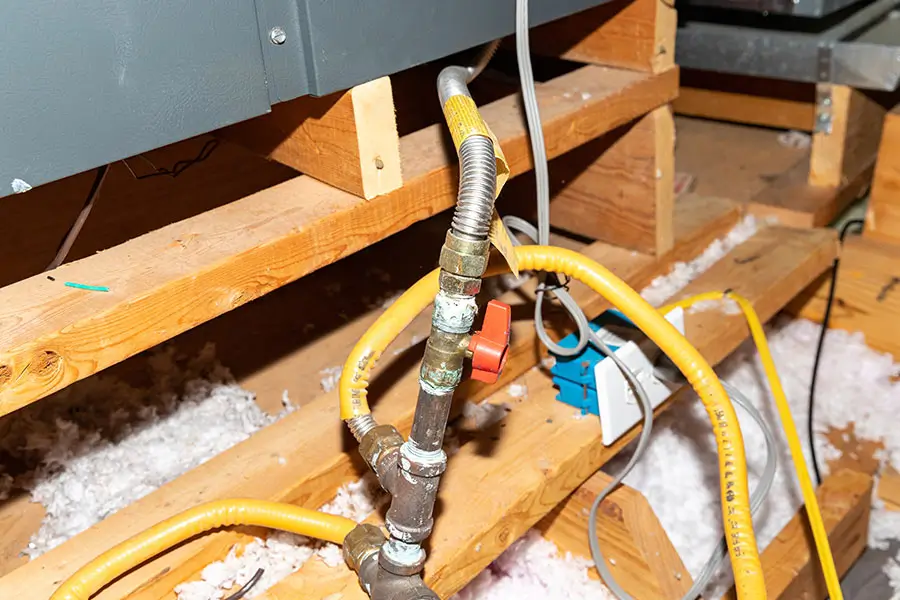
For Greenwood homeowners who want a comprehensive review of their gas appliances and connections, scheduling a gas line inspection and service is the right starting point. Knowing that your equipment has been inspected and is in good condition is worth the time it takes.
Keeping Your Greenwood Home Safe Year-Round
A gas smell in your home demands immediate action every single time. The steps outlined above are simple, but they matter enormously in the minutes when the situation is developing. Evacuate without delay, avoid all ignition sources, call your utility from outside, and wait for the all-clear before re-entering.
Once the immediate situation is resolved, the follow-up repair and a review of your appliance maintenance history are the steps that reduce the likelihood of facing the same situation again.
At Complete Comfort Heating, Air & Plumbing, we take gas appliance safety seriously on every service call we run in Greenwood and throughout Johnson County. Our technicians are trained to inspect, repair, and maintain gas-connected equipment with the care that the stakes require.
If you need a post-incident inspection, a heating or plumbing repair following a gas leak response, or simply want a qualified professional to assess the condition of your gas appliances, contact our team today and let us make sure your home is safe before anything else.