
Few comfort complaints are as consistent or as frustrating as uneven heating. The bedroom at the end of the hallway never quite warms up, the living room near the furnace stays comfortable while the upstairs rooms run cold, or one side of the house feels noticeably different from the other regardless of what the thermostat is set to. This pattern is common in Greenwood homes across all neighborhoods, from established areas near downtown to newer subdivisions along State Road 135, and it has specific causes that a qualified technician can identify and correct.
Understanding what drives uneven heating is the first step toward solving it. The causes range from straightforward maintenance issues to system design problems, and the right solution depends entirely on an accurate diagnosis of what is actually happening in your specific home.
Here is a look at the most common causes of uneven heating in Greenwood homes and what each one means for your comfort and your equipment.
A Dirty or Restricted Air Filter
Restricted airflow is one of the most common contributors to uneven heating, and a clogged air filter is the most frequent cause of restricted airflow. When the filter is packed with dust and debris, the blower cannot pull adequate air volume through the system. The rooms closest to the air handler may receive enough heat to feel comfortable while rooms further along the duct runs receive progressively less conditioned air.
The fix is straightforward when caught early. Replacing the filter restores airflow to the system and frequently resolves mild cases of uneven heating on its own. If the filter has been neglected for an extended period, secondary problems such as a coated blower wheel or a heat exchanger that has been operating under thermal stress may need to be addressed as well.
Checking the air filter monthly during the heating season and replacing it when it shows visible buildup is one of the most impactful and least expensive maintenance habits a Greenwood homeowner can develop.
Duct Leaks and Poor Duct Design
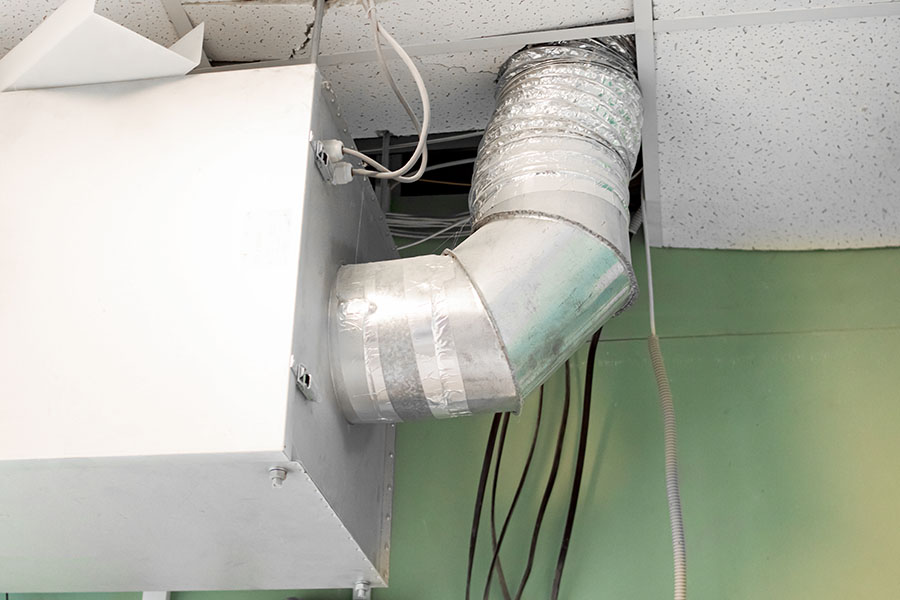
The duct system is responsible for distributing conditioned air from the furnace to every room in the home. When ducts develop leaks at joints, connections, or seams, a portion of the heated air escapes into unconditioned spaces before it ever reaches the living areas. The rooms served by the leaking duct runs end up receiving less heat than they should, while the furnace runs longer trying to compensate.
Poor duct design is a related but distinct problem. In some Greenwood homes, particularly those with additions, renovations, or original ductwork that was not properly engineered for the home’s layout, certain rooms may be at the end of undersized duct runs that were never capable of delivering adequate airflow. No amount of maintenance corrects a fundamentally inadequate distribution system.
In our service calls throughout Greenwood, duct leakage is one of the most consistently underestimated contributors to uneven heating. A duct system that loses 20 to 30 percent of its conditioned air to unconditioned spaces is not unusual in homes that have never had the ductwork professionally inspected or sealed.
A duct pressure test measures the actual leakage in the system, and targeted sealing of identified leak points restores distribution efficiency. For heating services in Greenwood that include a duct assessment, this is often where the most significant gains in comfort and efficiency are found.
An Undersized or Aging Furnace
A furnace that is undersized for the home it serves will struggle to heat the entire space evenly, particularly during the coldest stretches of a Johnson County winter. It may keep the areas nearest the thermostat comfortable while rooms further from the air handler trail behind, and during prolonged cold snaps it may never bring the home to the set temperature at all.
Aging furnaces face a similar challenge from a different direction. A system that is operating at reduced efficiency due to worn components, a degraded heat exchanger, or a blower that has lost capacity will produce less heat per unit of fuel consumed than it did when it was new. The practical result is uneven heating that was not present when the system was newer, and it will continue to worsen as the equipment ages further.
If uneven heating has developed gradually over several winters in a home where the system previously performed well, equipment age and efficiency loss are worth evaluating alongside maintenance factors.
Blocked or Closed Supply Registers
Supply registers that are partially or fully closed in certain rooms disrupt the balance of airflow throughout the entire duct system. Closing registers is a common but counterproductive attempt to redirect heat to other areas of the home. What it actually does is increase static pressure throughout the duct system, which reduces overall airflow, stresses the blower, and can accelerate heat exchanger wear over time.
Furniture placed directly over floor registers or in front of wall registers has the same effect. A register that is 50 percent blocked by a couch or bookcase delivers significantly less heat to the room it serves than a fully open register would.
Working in homes across Greenwood, blocked or closed registers are a surprisingly common finding when uneven heating is investigated. Confirming that every register in the home is fully open and unobstructed takes only a few minutes and should be among the first checks before more involved diagnostics are pursued.
Inadequate Return Air
A forced-air heating system requires a balanced flow of supply and return air to function properly. Supply registers deliver conditioned air into rooms. Return vents draw air back to the air handler to be conditioned again. When return air capacity is insufficient, rooms with supply registers but no return air path develop positive pressure that resists the flow of additional conditioned air into the space.
This is particularly common in bedrooms with doors that are kept closed. When a bedroom door is shut and there is no return vent in the room, the supply air has nowhere to go as the room pressurizes. The result is a room that heats less efficiently than open areas of the home, with air being forced out through gaps around the door frame rather than circulating back through the return system.
Homes with a single large return air vent in a central hallway are especially susceptible to this problem in rooms that are frequently closed off. Undercut door clearances and transfer grilles between rooms are practical solutions, and in some cases adding return air capacity to specific areas of the home is the most effective correction.
Zoning and Thermostat Placement Issues
In a single-zone heating system, the thermostat controls the entire home based on conditions at one location. If the thermostat is positioned in an area that heats quickly, such as a south-facing room that receives afternoon sun or a space near a supply register, it may reach the set temperature and shut the furnace off while other areas of the home are still cold.
Thermostat placement is a factor in uneven heating that is easy to overlook because the thermostat appears to be working correctly. The set temperature is being reached and maintained at the thermostat’s location. The problem is that its location is not representative of the home as a whole.
Repositioning a thermostat to a more central and representative location, or adding a zoning system that allows different areas of the home to be controlled independently, addresses this root cause directly. Zoning is particularly effective in two-story homes where heat stratification causes upper floors to run warmer and lower floors to run cooler than a single thermostat can account for.
Heat Loss Through Insulation and Air Sealing Gaps
Uneven heating is not always a problem with the heating system itself. Rooms that consistently run colder than others despite adequate heat delivery are sometimes losing heat faster than the system can replace it. Inadequate insulation in exterior walls, a poorly insulated attic above upper-floor rooms, or air sealing gaps around windows, doors, and penetrations allow heat to escape at a rate that creates a persistent comfort deficit.
Based on what we see in Greenwood properties, older homes with original insulation and newer homes where air sealing was not completed thoroughly are both susceptible to this pattern. The room that is always cold in winter is often also the room that is always warm in summer, which points to a building envelope issue rather than a heating system issue.
Addressing insulation and air sealing is outside the scope of HVAC service, but understanding that the heating system is not always the source of uneven comfort is an important context for diagnosing the problem correctly. A technician who measures actual airflow delivery at each register and confirms the system is performing as designed can help distinguish between an HVAC problem and a building envelope problem.
What a Professional Assessment Covers
Uneven heating is rarely caused by a single factor in isolation. Most cases involve a combination of two or three contributing issues that work together to create the comfort gap a homeowner experiences. A thorough diagnostic approach addresses each potential cause systematically rather than guessing at the most likely explanation.
A professional assessment of uneven heating typically includes airflow measurement at supply registers, static pressure testing in the duct system, blower performance evaluation, inspection of the furnace’s heat output, thermostat calibration verification, and a visual inspection of register placement and return air configuration. The findings from that assessment give a technician the specific information needed to recommend corrections that will actually make a difference.
Scheduling heating repair and maintenance service that includes a whole-system evaluation is the most reliable path to understanding and correcting uneven heating rather than addressing individual symptoms without a clear picture of what is driving them.
Addressing the Root Cause in Your Greenwood Home
Uneven heating in Greenwood homes is a solvable problem in almost every case. The causes are specific, the diagnostic tools to identify them are established, and the corrections available range from straightforward maintenance to targeted duct work to equipment upgrades depending on what the assessment reveals.
What does not work is trying to compensate for uneven heating by adjusting the thermostat higher or closing registers in comfortable rooms. Both approaches create new problems while leaving the underlying cause in place.
The most cost-effective path is an accurate diagnosis followed by targeted corrections. For most homes, addressing the primary causes of uneven heating also improves overall system efficiency and reduces the furnace’s operating hours, which lowers energy costs and extends equipment life at the same time.
Scheduling annual furnace maintenance that includes an airflow and distribution check is the most practical way to stay ahead of the conditions that lead to uneven heating before they become the persistent winter complaint that sends homeowners searching for answers mid-season.
Consistent Comfort Throughout Your Greenwood Home
Every room in your home deserves reliable heat through a Johnson County winter. When the distribution is uneven, the problem has a cause, and that cause has a solution.
At Complete Comfort Heating, Air & Plumbing, our technicians approach uneven heating with the systematic diagnostic process it requires. We identify what is actually driving the comfort gap in your home and recommend the corrections that will make a real, lasting difference.
If certain rooms in your home never quite reach the temperature you set, contact our team today to schedule an assessment and get your home heated the way it should from every register in every room.