
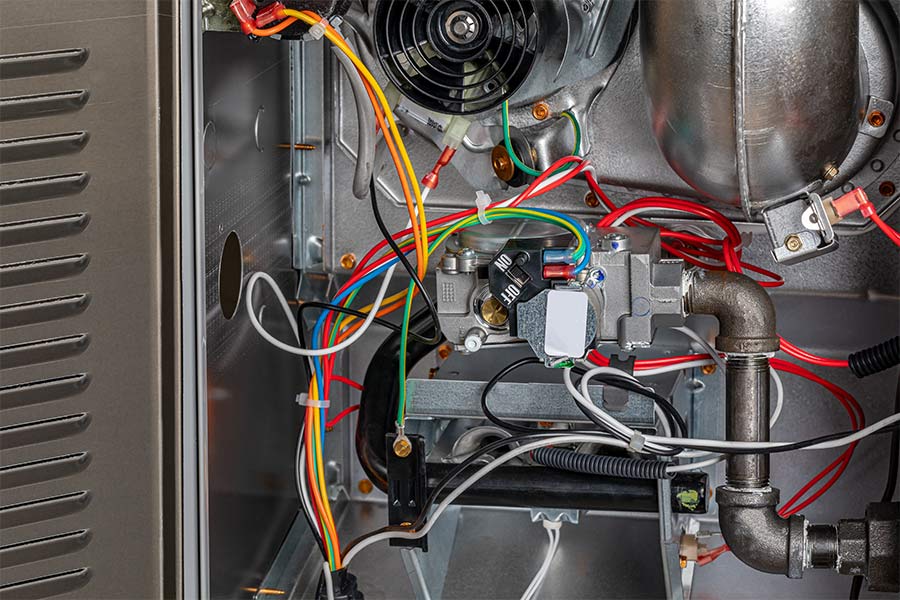
A furnace that keeps shutting off before your home reaches a comfortable temperature is one of the more frustrating heating problems a homeowner can face. The system appears to be working, it fires up and runs, and then it shuts down well before the job is done. This pattern, known as short-cycling, is not a minor quirk. It is a sign that something is preventing the furnace from completing a normal heating cycle, and it puts real stress on the components that experience the most wear at startup.
In Brownsburg, where January and February temperatures can drop well below freezing and homes in neighborhoods like Arbor Hills, Cardinal Pointe, and the newer developments along US-136 rely on consistent heat through the night, a furnace that keeps cutting out is not just uncomfortable. It is a problem that compounds the longer it runs uncorrected.
Here is a breakdown of the most common reasons a furnace keeps shutting off in Brownsburg homes and what each one means for your system.
The Air Filter Is Clogged
A severely clogged air filter is the most common cause of furnace short-cycling, and it is also the most preventable. When the filter is packed with dust and debris, airflow through the system is restricted to the point where the heat exchanger cannot shed heat fast enough during operation. The furnace’s high-limit switch, which is a safety device designed to prevent overheating, trips and shuts the system down before damage occurs.
The furnace then restarts once the heat exchanger cools, runs again with the same restricted airflow, overheats again, and shuts down again. This cycle repeats until the filter is replaced or the system is shut off entirely.
In our service calls throughout Brownsburg, a clogged filter is the first thing a technician checks when a homeowner reports short-cycling. If the filter has not been changed in several months, particularly during heavy heating season use, replacing it is the starting point for diagnosis. If short-cycling continues after a filter replacement, a deeper issue is present and professional diagnosis is the next step.
The Furnace Is Overheating
Overheating is what the high-limit switch is designed to prevent, and a furnace that trips it repeatedly is telling you that the heat exchanger is getting hotter than it should be during operation. A clogged filter is one cause, but it is not the only one.
Blocked or closed supply registers in multiple rooms restrict airflow in the same way a clogged filter does. Return air vents that are obstructed by furniture, rugs, or storage boxes reduce the volume of air the blower can pull through the system. A blower motor that is losing capacity due to age or debris accumulation cannot move adequate air volume even when the filter is clean and the registers are open.
Any combination of these factors can cause the furnace to overheat and trigger the high-limit switch. A technician performing a diagnostic visit will assess airflow through the system, check static pressure in the ducts, and inspect the blower to identify exactly where the restriction is occurring.
Repeated high-limit trips are also hard on the heat exchanger over time. The thermal stress of repeated overheating cycles accelerates crack formation in the heat exchanger, which creates a more serious safety concern down the road. Addressing the cause promptly protects the system and the household. Scheduling heating repair in Brownsburg, IN at the first sign of repeated shutdowns is the right call.
The Flame Sensor Is Dirty or Failing
The flame sensor is a small rod positioned in the burner assembly that confirms to the furnace’s control board that the burner has successfully lit. When the sensor is coated with oxidation or debris, it cannot read the flame accurately and signals the control board to shut the gas off as a safety precaution. The result is a furnace that lights, runs for a few seconds, and then shuts down before the home receives any meaningful heat.
This is one of the more common causes of short-cycling in gas furnaces, particularly in systems that have not received regular maintenance. The flame sensor is a relatively simple component to clean or replace, but it requires proper access to the burner assembly and should be handled by a qualified technician.
Working in homes across Brownsburg, a dirty flame sensor is a frequent finding on furnaces that are a few years old and have been running through multiple heating seasons without a professional tune-up. Annual heating maintenance that includes cleaning the flame sensor prevents this cause of short-cycling before it becomes a problem.
The Thermostat Is Malfunctioning or Poorly Positioned
A thermostat that reads room temperature inaccurately can cause the furnace to shut off before the home has actually reached the set point. If the thermostat is positioned near a heat source, such as a sunny window, a lamp, or a supply register, it may register a temperature higher than the actual room temperature and signal the furnace to shut down prematurely.
Thermostat wiring faults, low batteries in wireless models, or compatibility issues between a newer smart thermostat and an older furnace can also produce erratic behavior that resembles short-cycling. In some cases, a smart thermostat that was not properly configured during installation runs schedules or setback modes that cut heating cycles short in ways the homeowner does not intend.
A technician can verify thermostat accuracy, check the wiring connections at both the thermostat and the furnace control board, and confirm whether the thermostat is communicating correctly with the system. If the thermostat is ruled out as the cause, the diagnostic moves to the furnace itself.
The Furnace Is Oversized for the Home
An oversized furnace heats the space near the thermostat rapidly, satisfying the thermostat’s set point before the heat has distributed evenly throughout the home. The furnace shuts off, the thermostat quickly calls for heat again as temperatures equalize, and the cycle starts over. The result is a home that never feels consistently comfortable and a furnace that starts far more frequently than it was designed to.
Each startup is a moment of peak electrical and mechanical stress on the ignition components, inducer motor, and blower. A furnace that short-cycles due to oversizing accumulates that stress at a rate that significantly shortens its service life compared to a properly sized system running full heating cycles.
Oversizing is a problem that originates at installation, and correcting it typically means replacing the equipment with a unit that was properly sized using a load calculation for the specific home. If short-cycling has been present since a furnace was installed or replaced, sizing is worth evaluating as part of the diagnostic process.
There Is a Problem With the Gas Supply or Pressure
A furnace that receives insufficient gas pressure at the burner cannot sustain the flame through a full heating cycle. Low gas pressure causes the flame to weaken and eventually extinguish, triggering the flame sensor to shut the system down. This can happen intermittently, with the furnace running normally at some times and shutting off unpredictably at others, depending on demand on the gas supply line.
Gas supply issues can also result from a failing gas valve inside the furnace, which controls the flow of gas to the burner. A gas valve that is sticking or failing to open fully produces the same effect as low supply pressure from an external source.
Diagnosing gas supply and pressure issues requires proper testing equipment and a technician qualified to work on gas systems. This is not a problem to investigate without professional training, and it should be addressed promptly because a gas system that is not functioning correctly poses risks beyond just heating performance.
The Inducer Motor or Draft Issues
The inducer motor is responsible for drawing combustion gases out of the heat exchanger and venting them safely outside the home before the burner fires. The furnace’s control sequence requires the inducer to run first and confirm adequate draft before ignition occurs. When the inducer motor is failing, running below its rated speed, or when the venting system has a blockage or leak that prevents proper draft, the furnace may shut down before or shortly after ignition as a safety response.
A blocked flue, a bird’s nest in the vent pipe, or a section of vent that has come disconnected and is allowing combustion gases back into the mechanical space are all causes of draft-related shutdowns. In Brownsburg homes where furnaces vent through the side of the house or through the roof, these blockages can develop seasonally, particularly with debris accumulation or ice formation at the vent termination.
A technician will check inducer motor operation and inspect the venting system as part of a thorough diagnostic for short-cycling. Issues with the venting system are safety-critical and should be corrected before the furnace is returned to operation.
What to Do When Your Furnace Keeps Shutting Off
The first and most accessible step is checking and replacing the air filter if it has not been changed recently. Beyond that, confirming that all supply registers and return vents in the home are open and unobstructed takes only a few minutes and eliminates those factors from the diagnosis.
If the furnace continues to shut off after those checks, the cause is mechanical and requires a professional diagnostic visit. A technician with the right tools and experience can work through the causes systematically, identify exactly what is responsible, and repair it correctly rather than addressing symptoms.
For furnace repair service in the Brownsburg area, acting promptly matters. A furnace that is short-cycling is accumulating wear with every unnecessary startup, and the components under the most stress are among the most expensive to replace.
Keeping Your Brownsburg Home Warm All Season
A furnace that keeps shutting off is asking for attention. The causes are specific, they are diagnosable, and most of them are straightforwardly repairable when caught before they cause secondary damage to other components.
At Complete Comfort Heating, Air & Plumbing, our technicians serve homeowners throughout Brownsburg and Hendricks County with thorough diagnostics and honest repair recommendations. We do not guess at causes or recommend unnecessary work, and we back every repair with our commitment to getting the job done right the first time.
If your furnace keeps shutting off and you are ready to get to the bottom of it, contact our team today to schedule a diagnostic visit and get your home back to the consistent warmth it should have all winter.